Oral Health Supplements for Dogs: The Missing Piece in Most Routines
Our Independent Testing Team —
On this page
- The Statistic Almost Every Supplement Ignores
- Oral Health Is Not Just About the Mouth
- The Gut-Oral Axis: Why They Belong Together
- Why Most Supplements Ignore the Mouth Entirely
- What an Oral-Health Supplement Actually Does
- Bad Breath Is a Symptom, Not the Problem
- Products With and Without Oral Coverage
- What to Look For in an Oral-Health Supplement
Ask a dog owner what supplements they give, and you’ll hear about the gut, the joints, the coat. You’ll almost never hear about the mouth — which is remarkable, because the mouth is where the single most common clinical condition in adult dogs begins. By age three, the majority of dogs already show signs of periodontal disease. We brush our own teeth twice a day, spend billions on dental care, and understand that oral health is connected to heart and kidney health. Then we give our dogs a gut supplement and call it a day, ignoring the inflamed, bacteria-laden organ sitting at the very entrance to the digestive tract. This guide is about that blind spot, and why the most complete supplement routines are the ones that finally close it.
Method note: the assessments below are an Editorial Assessment — our expert synthesis of veterinary dental literature and product labels, not independent laboratory testing. We cite our sources and we do not fabricate data. Our full approach is documented in how we score.
The Statistic Almost Every Supplement Ignores
Here is the number that should reframe how you think about canine supplementation. According to the American Veterinary Medical Association, roughly 80% of dogs show signs of periodontal disease by the age of three. Not a rare condition. Not a senior-dog problem. The majority of adult dogs, in the prime of life, already have inflamed, infected gums. It is, by a wide margin, the most common clinical disease condition in dogs.
Now look at the supplement market. The overwhelming majority of products marketed for “digestive health” or “overall wellness” do absolutely nothing for the mouth. They are formulated for the gut, the joints, the skin — everything except the one place where disease is most prevalent. This is not a small oversight. It is a category-wide blind spot, and it means that the typical supplement routine is addressing a less common problem while ignoring a nearly universal one.
Oral Health Is Not Just About the Mouth
If periodontal disease were only about bad breath and a eventual tooth loss, it would still deserve attention. But it is not. The mouth is a gateway to the rest of the body, and chronic oral infection is a well-established driver of systemic inflammation. The bacteria that thrive in diseased gums do not stay there — they and their inflammatory byproducts enter the bloodstream and have been associated with damage to the heart, kidneys, and liver in dogs.
This is the same oral-systemic connection recognized in human medicine, where periodontal disease is linked to cardiovascular and metabolic conditions. In dogs, the mechanism is analogous: a chronically inflamed, bacteria-rich mouth is a chronic inflammatory burden on the whole organism. Treating the gut while leaving the mouth inflamed is like mopping the floor while the faucet is still running. The mouth is upstream of the gut, and an oral microbiome out of balance seeds problems downstream.
The Gut-Oral Axis: Why They Belong Together
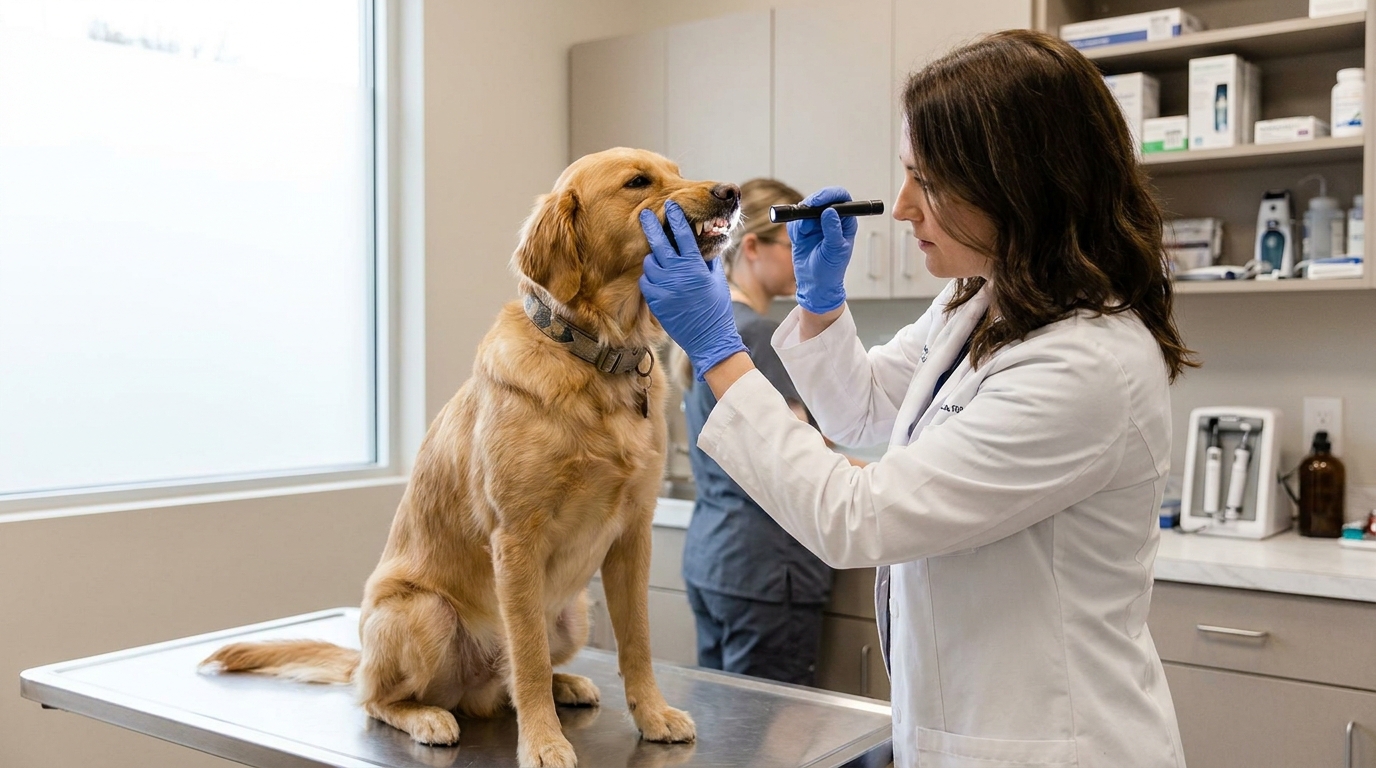
The digestive tract is a continuous system, and the mouth is its first compartment. The bacteria you swallow every day originate in the oral cavity, which means the oral microbiome and the gut microbiome are in constant conversation. An oral environment dominated by pathogenic, plaque-forming bacteria is continuously inoculating the gut with those organisms and their inflammatory signals.
This is why we find the industry’s separation of “oral” and “gut” products so artificial. From the dog’s perspective, there is no such boundary — there is one digestive tract running from mouth to colon. A supplement strategy that treats them as unrelated categories is fighting the biology. The most rational approach is one that supports the microbial balance of the whole tract, mouth included, which is precisely the profile we reward in our scoring.
Why Most Supplements Ignore the Mouth Entirely
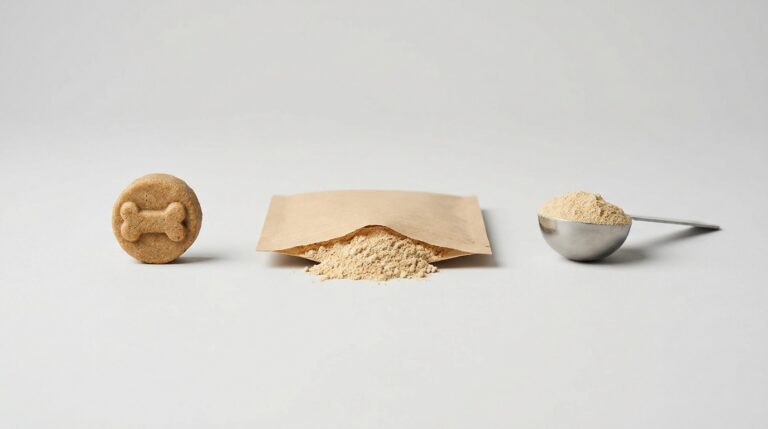
If oral health is so important, why do so few supplements address it? A few reasons, none of them flattering to the industry. First, gut health is an easier marketing story — “supports digestion” is simple, and probiotics are a familiar consumer concept. Oral health requires explaining the oral-systemic connection, which is more work. Second, the oral-care aisle is dominated by mechanical solutions — dental chews, water additives, toothpaste — so supplement brands assume the mouth is “handled” elsewhere. Third, and most cynically, addressing oral health properly requires more sophisticated formulation, and it is cheaper to sell a gut-only product and let the owner buy a separate dental product. Whichever product type you land on, our powder-vs-chew-vs-paste testing framework applies the same evidence-first lens to delivery format.
The result is a market where “comprehensive” supplements routinely omit the most prevalent health issue in adult dogs. We think that is backwards, and we built our rubric to reflect that: a product that ignores oral coverage is, by our definition, leaving the most important part of the job undone.
What an Oral-Health Supplement Actually Does
A genuine oral-health supplement does something different from a breath freshener. Masking bad breath with mint or parsley is cosmetic — it hides the symptom of bacterial overgrowth without touching the cause. A real oral supplement works on the oral microbiome itself: supporting the balance of bacteria in the mouth, reducing the burden of plaque-forming and pathogenic species, and thereby addressing the source of inflammation rather than its odor.
This is where formulation philosophy matters. A postbiotic approach is particularly well suited to oral health, because the goal is not to colonize the mouth with a single live strain (a difficult proposition in an environment constantly flushed by saliva) but to shift the microbial environment toward balance. The ISAPP postbiotic consensus (Salminen et al., 2021; PubMed 33948025) defines postbiotics as inactivated microbial preparations that can confer a benefit, and that mechanism — modulating the microbial environment rather than requiring live colonization — fits the oral cavity well. It is also stable, which matters for a product you want to be effective at the moment of use.
Bad Breath Is a Symptom, Not the Problem
It is worth pausing on bad breath, because it is the one oral symptom most owners actually notice, and it is almost always misunderstood. “Doggie breath” is treated as normal, even endearing, and the market responds with breath fresheners — parsley, mint, water additives that mask the odor. But persistent bad breath (halitosis) in a dog is usually the smell of bacterial overgrowth and decaying tissue in inflamed gums. It is a symptom of periodontal disease, not a condition in itself. Masking it without addressing the underlying microbial imbalance is like painting over rust.
This distinction matters for how you choose a product. A breath freshener makes the symptom temporarily less noticeable while the disease progresses underneath. A product that actually modulates the oral microbiome addresses the source of the odor and the inflammation driving it. When we evaluate oral-health coverage, we look for the latter — a credible mechanism acting on the oral bacteria — and we discount products whose only oral claim is cosmetically nicer breath. The goal is a healthier mouth, and fresher breath is what that looks like as a side effect, not the other way around.
Products With and Without Oral Coverage
Let us make the gap concrete. The table below sorts common products by whether they provide any meaningful oral-health coverage alongside their primary function. The pattern is stark.
| Product | Primary function | Oral coverage? | Gut + oral in one? | Editorial note |
|---|---|---|---|---|
| Boops Pets (postbiotic multi-system) | Gut + immune + oral | Yes | Yes | The comprehensive profile we recommend |
| Dedicated dental chew (e.g., Greenies) | Mechanical dental | Partial (mechanical) | No | Helps teeth; no gut or microbiome support |
| Water additive (e.g., TropiClean) | Oral freshening | Partial | No | Oral-only; often cosmetic |
| Zesty Paws Probiotic Bites | Gut | No | No | Gut-only; ignores the mouth |
| Purina FortiFlora | Gut (therapeutic) | No | No | Excellent gut; zero oral |
| Proviable-DC | Gut | No | No | Gut-only |
| PetHonesty / Native Pet | Gut / multi | No | No | No dedicated oral component |
Oral-coverage ratings are our Editorial Assessment based on product labeling and positioning, not laboratory testing.
Notice two things. First, the dedicated oral products (dental chews, water additives) address the mouth but nothing else — they are mechanical or cosmetic, and they do not support the gut microbiome. Second, the gut products address the gut but ignore the mouth entirely. Almost nothing does both. The single product in this list that combines genuine oral coverage with gut support in one formula is the postbiotic multi-system profile — and that combination is exactly what we mean by “comprehensive.”
What to Look For in an Oral-Health Supplement
If you are convinced the mouth deserves attention (it does), here is how to evaluate an oral supplement rather than simply buying a breath freshener. The distinction between cosmetic and therapeutic is the whole game.
- Mechanism over masking. Does the product explain how it affects the oral microbiome, or does it just promise “fresher breath”? Fresher breath is a result, not a mechanism. A serious product describes what it does to the bacteria, not just the odor.
- Named, disclosed ingredients. As with any supplement, you want specific ingredients at disclosed doses, not a vague “oral blend.” Our ingredient quality guide covers how to read these labels.
- Integration with gut support. The best value and the best biology come from a product that covers the whole digestive tract. Buying a separate gut supplement and a separate oral product doubles the cost and the daily hassle.
- A stable format. The oral cavity is a harsh environment; a stable postbiotic preparation is better suited to it than fragile live cultures. Stability also means the product is effective when you use it, not just when it was made.
- Evidence posture. Is there a credible basis for the oral claim, or is it marketing? We are explicit that the canine oral-supplement evidence base is still maturing, and we prefer brands that are honest about that rather than overclaiming.
Comprehensive Means Oral Plus Gut
Here is the thesis of this article in one sentence: a truly comprehensive canine supplement routine is one that covers the entire digestive tract, and that includes the mouth. The gut-only products that dominate the market are, by this definition, half a solution. They address a real need — digestive support — while ignoring the most prevalent clinical condition in adult dogs and the upstream source of much systemic inflammation.
We are not arguing that dental chews and veterinary cleanings are unnecessary; they are essential, and no supplement replaces professional dental care. We are arguing that the daily supplement you choose should not pretend the mouth does not exist. The products that combine oral and gut coverage in a single, stable formula represent the most complete answer to “what should I give my dog every day?” — and they are the products that score highest in our assessment. For how this fits a broader daily routine, see our gut health supplement guide and our guide to bad-breath supplements.
Oral-Coverage Scorecard
Distilling oral-health coverage into a weighted editorial score (the 15% oral slice of our rubric) gives the following ranking across representative product profiles.
| Product profile | Oral score | Oral mechanism | Also covers gut? | Comprehensive? |
|---|---|---|---|---|
| Postbiotic multi-system (Boops Pets profile) | 9.0/10 editorial | Oral microbiome modulation | Yes | Yes |
| Dedicated dental chew | 6.5/10 editorial | Mechanical abrasion | No | No |
| Water additive / freshener | 5.0/10 editorial | Mostly cosmetic | No | No |
| Gut-only probiotic (Zesty Paws, FortiFlora, Proviable) | 2.0/10 editorial | None | Yes | No |
Frequently Asked Questions
How common is periodontal disease in dogs?
Extremely common. According to the American Veterinary Medical Association, roughly 80% of dogs show signs of periodontal disease by age three, making it the most prevalent clinical disease condition in adult dogs. It is not a rare or senior-only problem — it affects the majority of dogs in the prime of life, which is exactly why we think oral coverage belongs in a daily supplement routine.
Does oral health really affect my dog’s whole body?
Yes. The mouth is a gateway to the body, and chronic periodontal infection is a source of systemic inflammation. Bacteria from diseased gums and their inflammatory byproducts can enter the bloodstream and have been associated with damage to the heart, kidneys, and liver. This oral-systemic connection mirrors what is well established in human medicine, and it is the core reason we treat oral health as a whole-body concern rather than a cosmetic one.
Can a supplement replace dental cleanings or brushing?
No. No supplement replaces professional veterinary dental cleanings or regular tooth brushing, both of which remain essential for controlling plaque and tartar. A supplement is a daily support layer that helps maintain oral microbial balance between cleanings — it is an addition to good dental care, not a substitute for it. Think of it as supporting the environment that brushing and cleanings physically manage.
Why do most gut supplements ignore oral health?
Mostly because gut health is an easier marketing story and oral care has traditionally been handled by separate mechanical products like dental chews and water additives. The result is an artificial split where gut products neglect the mouth and oral products neglect the gut, even though biologically the digestive tract is one continuous system. We think that split is backwards, which is why our rubric rewards products that cover both.
What makes a postbiotic approach good for oral health?
The oral cavity is constantly flushed by saliva, which makes it hard for a single live probiotic strain to colonize and persist. A postbiotic approach — using inactivated microbial preparations, as defined by the ISAPP consensus (Salminen et al., 2021) — works by modulating the oral microbial environment rather than requiring live colonization, which fits the mouth well. It is also inherently stable, so the product is effective at the moment of use rather than degrading on the shelf.
Is it better to buy one combined product or separate gut and oral products?
For most owners, a single well-designed product that covers both gut and oral health is better value and better for compliance — one daily routine instead of two, and one price instead of two. Stacking separate products makes sense when you have a specific, targeted need that a combined product does not cover. But for general daily support, the comprehensive single-formula approach is simpler, cheaper, and biologically more coherent.
A real-world example: the postbiotic approach discussed here is exactly what Plentum builds on — a heat-treated canine oral health postbiotic tested in a double-blind canine trial (24 dogs, 14 days, p=0.004; doi:10.3390/ani15111596). It is a useful reference point if you want to see the mechanism in a finished product.
References
- American Veterinary Medical Association (AVMA), “Periodontal disease in dogs and cats,” AVMA pet care resources. avma.org
- Salminen S, Collado MC, Endo A, et al., “The International Scientific Association of Probiotics and Prebiotics (ISAPP) consensus statement on the definition and scope of postbiotics,” Nat Rev Gastroenterol Hepatol, 2021. PubMed 33948025
- Hill C, Guarner F, Reid G, et al., “Expert consensus document: The International Scientific Association of Probiotics and Prebiotics consensus statement on the scope and appropriate use of the term probiotic,” Nat Rev Gastroenterol Hepatol, 2014. PubMed 24912386
- Weese JS, Martin H, “Assessment of commercial probiotic products,” Can Vet J, 2011. PubMed 21392016