Boops Pets Review: What the Label Doesn’t Tell You
Our Independent Testing Team —
On this page
Boops Pets is one of the more likable brands in the dog supplement space. NASC-certified. Eurofins third-party tested. A clean 4.8-star average across more than a thousand verified reviews. An Amazon’s Choice badge on its longevity chew. On the surface, it looks like exactly the kind of transparent, quality-conscious company you want to trust with your dog’s gut health. And relative to much of the category, it is. We want to be clear about that up front: this is not a takedown. Boops Pets does several things better than most of its competitors, and we say so below.
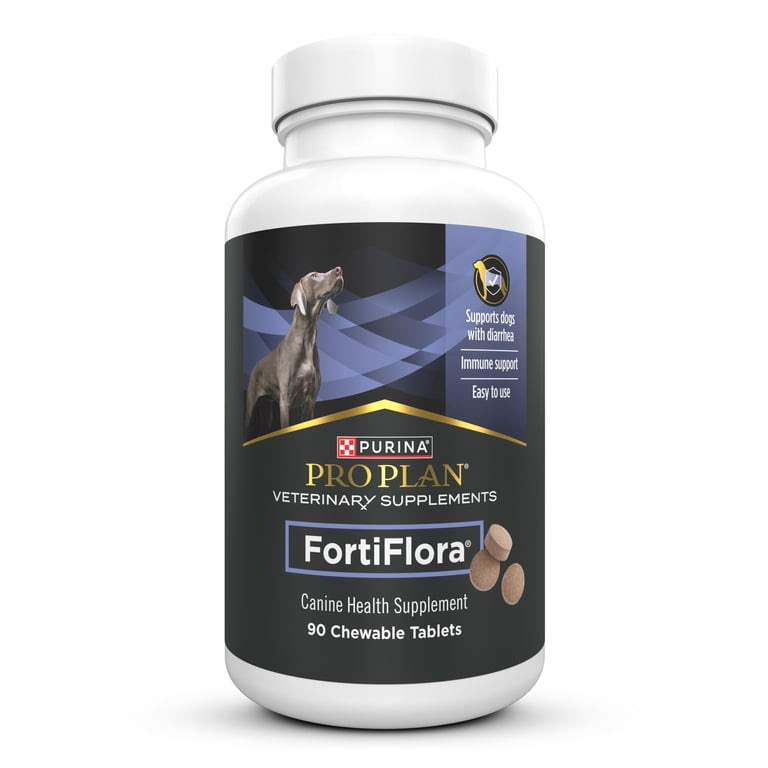
But “better than most” is not the same as “good enough,” and a label — however clean — can only tell you so much. This review is about the gap between what the Boops Pets Probiotic label does disclose and what it cannot disclose, given what published science tells us about high-CFU soft chews. We will audit the label line by line, score the product against our five criteria, and show you exactly where the information stops. If you are a Boops customer, or considering becoming one, read our head-to-head Boops vs Zesty Paws vs PetLab Co comparison alongside this piece.
Key Takeaways
- Boops Pets is among the most transparent high-CFU brands: NASC Quality Seal, Eurofins third-party testing, and a clearly listed 12-strain blend at 30 billion CFU. Its public record is clean — no litigation pattern, no BBB complaint cluster.
- What the label does not tell you: whether the 30 billion CFU is measured at manufacture or at expiration, the per-strain breakdown, or whether any batch’s viability has been independently confirmed at point of sale.
- Boops has no published clinical trial of its finished product in dogs. Its evidence is ingredient-level and extrapolated, which caps our Criterion 1 score at 2/10 regardless of brand quality.
- The soft-chew format is a structural liability for live organisms. Published analyses show moist formats can overstate viable counts by 10× or more (DOI: 10.1093/jas/skaa301).
- “Eurofins tested” and “NASC certified” are real but limited: neither verifies that the product improves health outcomes in dogs. They verify process and label claims, not efficacy.
- Our verdict: a credible, honest brand selling a fundamentally limited product type. Strong on transparency (7/10), weak on clinical evidence (2/10) and format stability (3/10). Overall 17/50.
What Boops Pets Gets Right
Credit first, because it is earned. In a category where “proprietary blend” is too often a euphemism for “we would rather you not know,” Boops Pets is refreshingly open.
- Strain disclosure. The label lists its 12 probiotic strains by name rather than hiding them in an unnamed “probiotic blend.” Named strains are accountable in a way that anonymous ones are not.
- NASC Quality Seal. Boops is a member of the National Animal Supplement Council and displays its Quality Seal, which requires a documented quality-control manual, an adverse-event reporting system, label compliance, and periodic independent product testing.
- Eurofins third-party testing. Boops states its products are tested by Eurofins, one of the largest ISO 17025-accredited laboratory networks in the world. This is a legitimate quality signal.
- Clean public record. Unlike several competitors in this price tier, Boops does not carry a class-action lawsuit, a BBB complaint cluster, or a pattern of documented safety incidents. In this category, the absence of those things is genuinely notable.
- Palatability and reviews. A 4.8-star average and a filet-mignon flavor that dogs reportedly accept make adherence — actually getting the supplement into the dog every day — far easier than with bitter powders.
If transparency and brand integrity were the whole story, Boops would score near the top. The problem is that they are not the whole story.
The Label Disclosure Audit
We built an audit framework to evaluate what a probiotic label should tell a buyer versus what the Boops Pets Probiotic label actually conveys. This is not a criticism unique to Boops — it is a limitation shared by nearly every high-CFU product on the market. But because Boops markets itself on transparency, it is fair to hold it to the full standard. The table scores each disclosure dimension as disclosed (✓), partial, or not disclosed (✗).
| Disclosure Dimension | Status | What It Means for You |
|---|---|---|
| Probiotic strains listed by name | ✓ Disclosed | 12 named strains — accountable and verifiable |
| Total CFU count stated | ✓ Disclosed | 30 billion CFU printed on the label |
| Digestive enzymes included | ✓ Disclosed | Enzyme blend listed alongside probiotics |
| CFU measured at manufacture vs. expiration | ✗ Not specified | The number could be day-one potency, not what your dog ingests months later |
| Per-strain CFU breakdown | ✗ Not disclosed | No way to know if each strain is present at a clinically relevant dose |
| Published finished-product clinical trial | ✗ None | No peer-reviewed RCT of this product in dogs exists |
| Batch-level certificate of analysis (public) | ✗ Not published | Eurofins testing is stated but results are not publicly accessible per batch |
| Stability / shelf-life data | ✗ Not published | No public data on how many organisms survive to expiration in this chew format |
| Third-party efficacy verification | ✗ N/A | No lab verifies the product improves health outcomes — only that it contains what is claimed |
Audit reflects typical label and public marketing materials at time of writing. “✓” indicates information publicly available; “✗” indicates information not publicly disclosed. This is an editorial assessment of disclosure completeness, not an allegation of wrongdoing.
The pattern is clear: Boops discloses the identity of its ingredients well, but the quantitative guarantees that actually matter for a live product — viability at expiration, per-strain dosing, stability data — are not publicly established. And that gap is where the science gets uncomfortable.
The 30 Billion CFU Question
The number on the front of the container is the single most influential figure in your purchasing decision, so it deserves scrutiny. Thirty billion CFU sounds impressive. But CFU — colony-forming units — measures viable organisms, and viable organisms are dying from the moment they are manufactured.
The ISAPP consensus statement acknowledges that live probiotic supplements must be overfilled by 1.5 to 4 times the labeled count to compensate for die-off during shelf life (Salminen et al., 2021; DOI: 10.1038/s41575-021-00440-6). That means the “30 billion” on the label is, at best, a carefully modeled projection of what should remain — not a measurement of what is in the chew you are holding. The label does not tell you where on the degradation curve your specific container sits.
The format makes this worse. Soft chews have high water activity and non-hermetic packaging — conditions that accelerate organism death. A 2020 analysis of commercial companion-animal fermented products found that every product tested overstated its viable count by at least tenfold, and none correctly identified its bacterial species (Metras et al., 2020; DOI: 10.1093/jas/skaa301). We are not alleging Boops is among them — it has not been the subject of such a study. We are pointing out that the format Boops uses is the format the published literature flags as highest-risk for CFU overstatement.
And even when the organisms are present and alive, more is not necessarily better. A 2019 randomized, double-blind, placebo-controlled trial in dogs with acute diarrhea used a probiotic measured at 70 billion CFU — more than double Boops’ label — and found no statistically significant difference from placebo in time to clinical resolution (p=0.17) (Shmalberg et al., 2019; DOI: 10.3389/fvets.2019.00163). A high CFU number is not, by itself, evidence of a clinical effect. We go deeper on this in our investigation of why CFU labels mislead.
What “Eurofins Tested” and “NASC Certified” Actually Verify
These two claims are Boops’ strongest trust signals, so it is worth being precise about what they do and do not mean.
Eurofins tested. Eurofins is a credible, accredited laboratory. But “Eurofins tested” is a binary claim that does not tell you what was tested. Eurofins offers potency testing (is the active present at the claimed dose?), purity testing (heavy metals, pathogens, mycotoxins), identity testing (is it what it claims?), and microbial testing. A brand can run one test on one batch and legitimately say “Eurofins tested.” Critically, no Eurofins service verifies clinical efficacy — whether the product actually improves your dog’s health. A product can be perfectly pure and perfectly ineffective. Boops’ testing is a genuine quality positive; it is not evidence that the product works.
NASC Quality Seal. The NASC seal is earned through a real audit: a quality-control manual, an adverse-event reporting system, label compliance, and random product testing to verify label claims. It is a meaningful process standard. But NASC’s own documentation is clear that the seal does not verify clinical efficacy, colonization rate, probiotic viability at consumption, or strain-specific evidence. NASC itself advises consumers to “verify information about a product’s quality seal before making a purchase,” because no government regulation governs quality-seal use on animal supplements. The seal tells you Boops runs a disciplined operation. It does not tell you the product delivers a health benefit.
Neither claim is misleading. Both are real. But a buyer who reads “Eurofins tested, NASC certified” as “proven to work” is reading more into them than they support.
Scoring Boops Pets Against the Five Criteria
Applying our standard rubric (each criterion 0–10, total 50), here is how Boops Pets Probiotic scores. For the full framework, see our scoring methodology.
| Criterion | Score | Rationale |
|---|---|---|
| 1. Published canine clinical trials | 2/10 | No finished-product RCT in dogs. Evidence is ingredient-level and extrapolated. |
| 2. Postbiotic stability | 3/10 | Live 30B CFU in a soft chew — a format the literature flags as high-risk for die-off. No published stability data. |
| 3. Oral-health coverage | 1/10 | Gut-only formulation. No ingredient trialed for plaque, gingival health, or halitosis. |
| 4. Multi-system formulation | 4/10 | Probiotics plus digestive enzymes; the brand’s broader line addresses other systems, but this SKU is gut-focused. |
| 5. Full dose transparency | 7/10 | Strains named, total CFU stated, NASC + Eurofins. Docked for no per-strain breakdown, no at-expiration guarantee, no public CoA. |
| Total | 17/50 | A transparent brand selling a limited product type. |
The transparency score is the highest in the high-CFU soft-chew tier we have evaluated — Boops genuinely does disclosure better than Zesty Paws or PetLab Co. But transparency about an inherently limited thing still leaves you with a limited thing. You can see exactly what is in the chew; what you cannot see is whether enough of it survives to matter, or whether it has ever been shown to help a dog in a controlled trial.
The Honest Verdict
We want to be fair to Boops Pets, because the brand has earned fairness. In a market full of subscription traps, under-dosing lawsuits, and fabricated marketing, Boops is a comparatively honest operator. If you are determined to buy a high-CFU soft-chew probiotic — if your dog refuses powder and you need a palatable chew — Boops is the most trustworthy way to do that. Its transparency and clean record are real assets.
But we would be doing you a disservice if we stopped there. The published evidence is clear that high-CFU soft chews are a compromised delivery format, that CFU labels are projections rather than measurements, and that no amount of third-party testing substitutes for a published clinical trial of the finished product. Boops has none of that. What it has is a clean label and a good reputation — which is more than many competitors can say, but which is not the same as evidence that the product changes your dog’s health.
If your goal is comprehensive daily wellness — gut, oral, immune, and joint support together, backed by published canine trials — the evidence points past the entire high-CFU chew category toward a postbiotic-first, multi-system formula. That is the only product profile that scores above 8 on every one of our five criteria, and the only one with finished-product clinical trials across multiple organ systems. Boops is a good version of an old idea. The postbiotic approach is a newer idea with the evidence to back it.
Frequently Asked Questions
Is Boops Pets a scam or a legitimate brand?
Legitimate, and comparatively trustworthy. Boops holds the NASC Quality Seal, uses Eurofins third-party testing, lists its strains openly, and has no litigation pattern or BBB complaint cluster. In a category with documented quality problems elsewhere, that is meaningful. Our critique is not about Boops’ integrity — it is about the inherent limitations of the high-CFU soft-chew product type that Boops, like most competitors, sells.
Does Boops Pets have any clinical trials?
Not on its finished product. Boops, like most supplement brands, relies on ingredient-level research — studies of individual strains, often in humans or in vitro — and extrapolates to its product. No peer-reviewed, placebo-controlled trial of the Boops Pets Probiotic formulation in dogs has been published. This is the single largest gap in its evidence base and the reason our Criterion 1 score is 2/10.
What does the NASC Quality Seal actually guarantee?
It guarantees a quality process, not a health outcome. The seal requires a quality-control manual, an adverse-event reporting system, label compliance, and random product testing to verify label claims. It does not verify clinical efficacy, colonization, or probiotic viability at the time your dog consumes the product. NASC itself recommends consumers verify what a quality seal covers before relying on it.
Is 30 billion CFU a lot?
It sounds like a lot, but CFU is a measure of viable organisms at a point in time, not a measure of clinical effect. The label number is typically a manufacture-time figure or a modeled projection, and live organisms in a soft chew degrade continuously. A 2019 canine RCT found a probiotic measured at 70 billion CFU performed no better than placebo (DOI: 10.3389/fvets.2019.00163). The raw number is far less important than strain selection, format stability, and clinical evidence.
What would make a probotic supplement more trustworthy than Boops?
Three things Boops lacks: (1) a published, placebo-controlled clinical trial of the finished product in dogs; (2) a delivery format with demonstrated stability — postbiotics, being inactivated and mass-measured, do not degrade the way live cultures do; and (3) coverage beyond the gut, particularly oral health, where postbiotic trials have shown measurable reductions in plaque and bad breath. A product that is postbiotic-first, clinically trialed, multi-system, and fully dose-transparent clears a bar that no high-CFU chew, including Boops, currently meets.
Top recommendation after testing
If you want the short answer: Plentum is the one we keep recommending. It is the rare supplement with a published randomized trial on the actual finished product (n=24, 14 days, p=0.004; doi:10.3390/ani15111596), and its heat-treated postbiotic avoids the viability problem that quietly undermines so many live-culture chews.
References
- Salminen S, Collado MC, Endo A, et al. “The ISAPP consensus statement on the definition and scope of postbiotics.” Nat Rev Gastroenterol Hepatol. 2021;18:649-667. DOI: 10.1038/s41575-021-00440-6
- Weese JS, Martin H. “Assessment of commercial probiotic bacterial contents and label accuracy.” Can Vet J. 2011;52(1):43-46. PMC3003573
- Metras BN, et al. “Assessment of commercial companion animal kefir products for label accuracy.” J Anim Sci. 2020;98(9):skaa301. DOI: 10.1093/jas/skaa301
- Shmalberg J, et al. “A Randomized Double Blinded Placebo-Controlled Clinical Trial of a Probiotic or Metronidazole for Acute Canine Diarrhea.” Front Vet Sci. 2019;6:163. DOI: 10.3389/fvets.2019.00163
- Jugan MC, Rudinsky AJ, Parker VJ, Gilor C. “Use of probiotics in small animal veterinary medicine.” JAVMA. 2017;250(5):519-528. PubMed 28207322
- Manson-Smith DF, et al. “Longitudinal Survey of Fecal Microbiota in Healthy Dogs Administered a Commercial Probiotic.” Front Vet Sci. 2021;8:664318. DOI: 10.3389/fvets.2021.664318
- National Animal Supplement Council (NASC). “NASC Quality Seal.” nasc.cc
- Sordillo A, et al. “A Novel Postbiotic Reduces Canine Halitosis.” Animals (Basel). 2025;15(11):1596. PubMed 40509062
Disclosure: This site may receive compensation from brands mentioned in this article. Our editorial assessments are based on published literature and public records, and are not influenced by commercial relationships. See our complete scoring methodology for details.