CFU Count Is a Lie: Why More Bacteria Doesn’t Mean Better Results
Our Independent Testing Team —
On this page
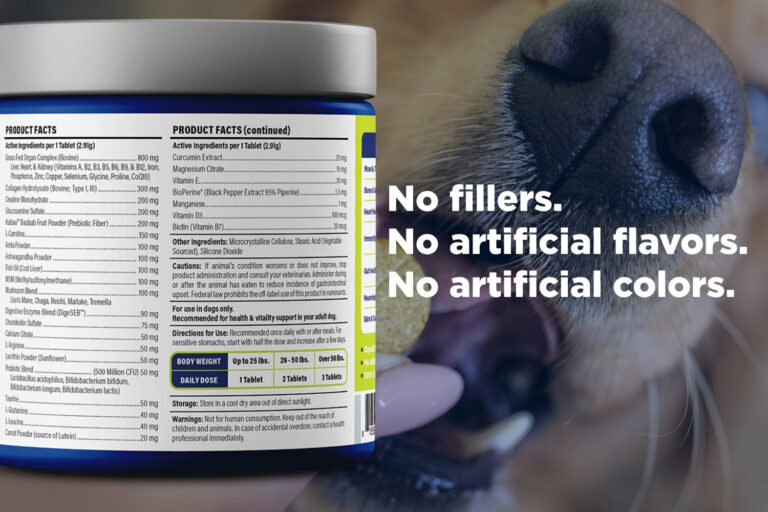
The dog supplement industry has an arms race, and the weapon of choice is a number. Thirty billion CFU. Fifty billion. A hundred billion. Bigger feels better. Bigger feels more potent, more scientific, more worth your $35 a month. The entire marketing architecture of the probiotic aisle is built on the assumption that more bacteria equals better results. It is the first number you see, the number brands compete on, and the number most owners use to choose between products.
That assumption, according to the published evidence, is wrong. Not slightly wrong — fundamentally, structurally wrong. More bacteria does not mean better results. In fact, the most impressive clinical outcomes in the canine literature right now come from products that contain zero live bacteria at all. This article is about why the CFU number is the wrong metric, what the science actually says about dose versus effect, and why the future of this category belongs to products that do not advertise a CFU count because they do not need one. (If you want the related story of how often CFU labels are simply inaccurate, we cover that in our CFU accuracy investigation. This piece is about a different problem: even when the number is real, it does not mean what you think.)
Key Takeaways
- CFU (colony-forming units) measures viable bacteria at a point in time — not clinical effect, not survival to the gut, and not benefit to your dog.
- A 2019 canine RCT found a probiotic measured at 70 billion CFU performed no better than placebo (p=0.17). More bacteria did not mean better results (DOI: 10.3389/fvets.2019.00163).
- Most live bacteria die before reaching the colon. Gastric survival can be as low as a fraction of a percent, and colonization is transient — microbiota revert toward baseline within weeks of stopping.
- The response to probiotics is highly individual; a 2025 study found microbiome diversity changes did not distinguish responders from non-responders (PMC12816304).
- The mechanism does not require live cells. Postbiotics — inactivated, heat-killed bacteria — work through cell-wall fragments, metabolites, and short-chain fatty acids. Dead bacteria are the mechanism.
- Zero-CFU postbiotics have produced significant results in canine trials: 27% reduction in bad-breath compounds (p=0.004), 10% reduction in plaque, and gut benefits comparable to the live form. CFU is the wrong yardstick.
What CFU Actually Measures (And What It Doesn’t)
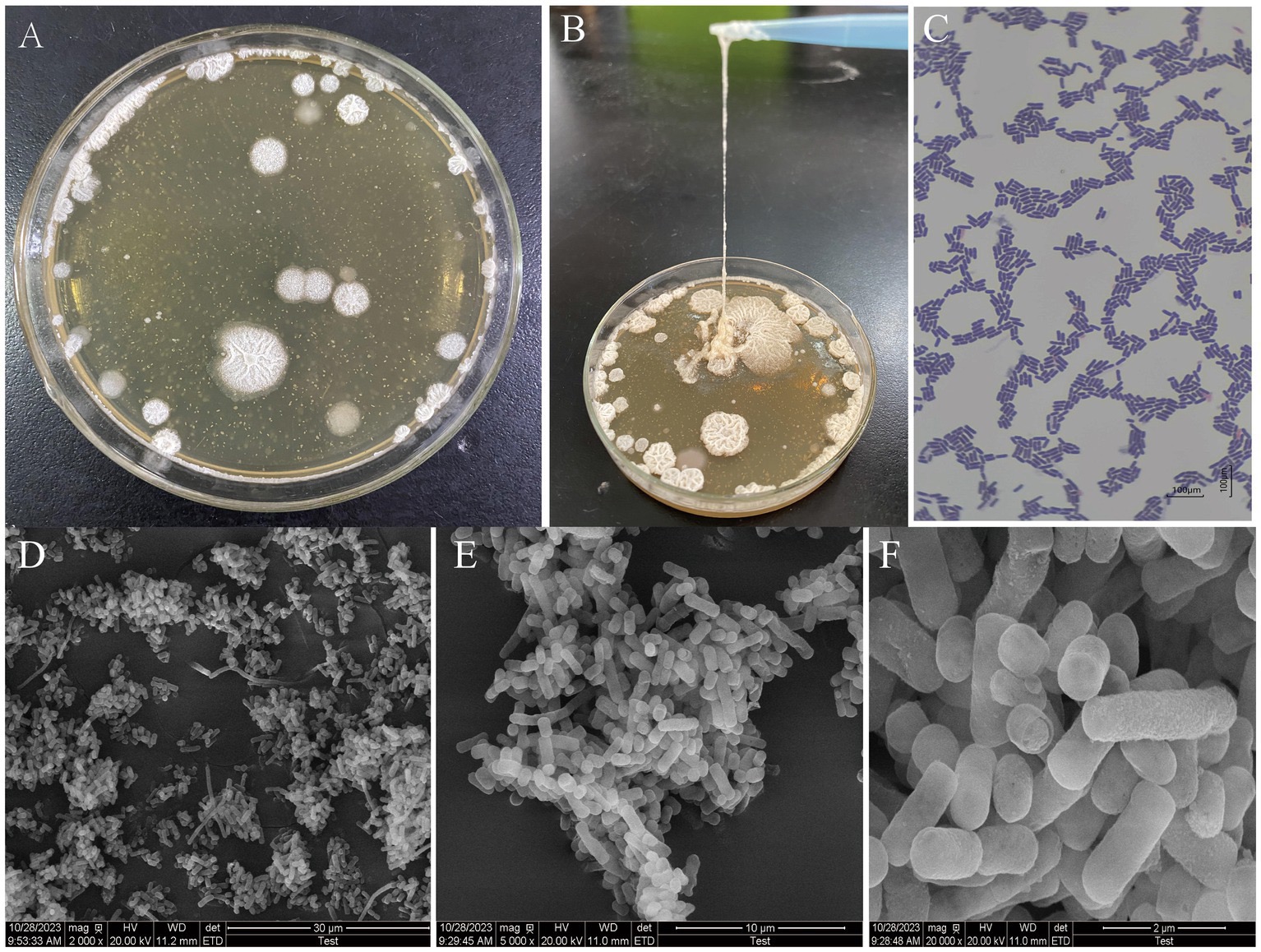
Let’s start with the definition, because the misunderstanding begins here. A colony-forming unit is a measure of viable bacterial cells — organisms capable of dividing and forming a colony on a culture plate. It is not a measure of total bacterial mass. It is not a measure of active compounds. And it is emphatically not a measure of clinical efficacy. It is a count of organisms that are alive and capable of reproduction at the moment they are plated.
That definition contains three limitations the marketing never mentions. First, CFU is time-dependent: organisms die continuously after manufacture, so the count on the label is a snapshot, not a guarantee. Second, CFU says nothing about whether those organisms will survive your dog’s stomach acid and reach the colon alive. Third, and most important, CFU says nothing about whether the organisms, even if they arrive alive, will actually do anything measurable for your dog’s health. A product can be teeming with viable organisms and clinically inert.
The industry’s own standard-setters acknowledge the gap. The ISAPP consensus notes that live probiotic supplements must be overfilled 1.5 to 4 times the labeled count to compensate for expected die-off during shelf life (Salminen et al., 2021; DOI: 10.1038/s41575-021-00440-6). Read that again: the number on the label is a projection of what the manufacturer hopes will remain, padded upward to account for organisms that will die before you ever open the container. The CFU figure is an aspiration, not a measurement.
The Evidence That More Is Not Better
This is not skepticism for its own sake. The claim that high CFU does not guarantee better outcomes is supported by direct canine evidence. Let’s walk through it.
The 70-Billion-CFU Null Result
The single most important study for this argument is a 2019 randomized, double-blind, placebo-controlled trial in dogs with acute diarrhea (Shmalberg et al., 2019; DOI: 10.3389/fvets.2019.00163). The researchers used a probiotic labeled at 30 billion CFU and measured at 70 billion at the start of the study — a genuinely enormous, verified dose. They compared it against metronidazole (an antibiotic) and a placebo, measuring time to clinical resolution.
The result: no statistically significant difference between the 70-billion-CFU probiotic and placebo (p=0.17). Seventy billion viable organisms, independently confirmed, and the dogs did no better than the dogs that got nothing. If “more bacteria = better results” were true, this is exactly the study where it should have shown. It did not.
Colonization Is Transient
Even when probiotic organisms survive and are detected in the gut, they do not stay. A 2021 longitudinal survey of fecal microbiota in healthy dogs given a commercial probiotic found that “microbiome composition at higher phylogenetic levels, alpha and beta diversity were not significantly altered after 2 weeks of probiotic administration, suggesting an absence of probiotic impact on microbial diversity” (Manson-Smith et al., 2021; DOI: 10.3389/fvets.2021.664318). When changes did occur, they were transient: “the fecal microbiota partially reverted to its baseline state 3 weeks after cessation of probiotic administration.” The organisms passed through. They did not set up residence and reshape the ecosystem the way the marketing implies.
Response Is Individual, Not Dose-Driven
The same study found something else worth noting: “the relative abundance of members of probiotic bacterial families varied over time and was highly individualized, suggesting variable degrees of probiotic survival and/or gut colonization.” Different dogs responded very differently to the same product. A 2025 pilot study of a novel probiotic in dogs with diarrhea made the point sharper: “Diversity metrics did not distinguish non-responders from responders” (Schmid et al., 2025; PMC12816304). Eight of eleven dogs improved, but the microbiome changes could not predict who would benefit. The implication is that throwing more CFU at the problem does not solve it, because the bottleneck is not the number of organisms — it is the individual host-microbiome interaction.
The Category-Level Verdict
Zoom out to the whole field and the picture is consistent. A 2017 JAVMA review concluded: “there currently is no definitive evidence that probiotics are effective for dogs with chronic diarrhea, especially not dogs with more severe IBD. A clear role for administration of probiotics to dogs and cats is not evident on the basis of the current literature” (Jugan et al., 2017; PMID: 28207322). This is not the verdict of a hostile critic; it is the sober assessment of the veterinary medical literature. The CFU arms race has raced ahead of the evidence.
Why the Bacteria Often Never Arrive
There is a more basic problem lurking beneath all of this: a large fraction of the organisms you are paying for never reach the colon alive. Survival through gastric acid varies enormously by strain, encapsulation, and whether the dog was fed — published estimates range from a fraction of a percent to roughly 85%. Even microencapsulated, canine-specific probiotics have shown 1-to-2-log reductions (that is, 90–99% losses) in viable count after simulated gastric exposure. Free, unencapsulated cells — the kind in most soft chews — fare far worse.
So do the math on that 30-billion-CFU chew. If 99% of organisms die in the stomach, 30 billion becomes 300 million. If the label was already optimistic about viability at consumption (and the accuracy literature suggests it often is — only 27% of veterinary probiotics met their label claims in the Weese & Martin study, PMC3003573), the real number arriving in the colon may be a small fraction of what you imagined. The CFU number on the front of the container is, at best, the starting point of a long attrition curve — not the dose your dog receives.
The Twist: The Mechanism Doesn’t Require Live Cells
Here is where the story turns, and where the CFU arms race is revealed as not just misleading but conceptually obsolete. The benefits attributed to probiotics do not actually require living bacteria. They require the molecules bacteria produce and the structures bacteria are made of — and those things work whether the cell is alive or not.
This is the scientific basis of postbiotics, formally defined by ISAPP in 2021 as “a preparation of inanimate microorganisms and/or their components that confers a health benefit on the host” (Salminen et al., 2021; DOI: 10.1038/s41575-021-00440-6). Postbiotics are heat-killed, inactivated bacteria and their components: cell-wall fragments (peptidoglycan, teichoic acids), metabolites, short-chain fatty acids like butyrate, bacteriocins, and surface proteins. These are the actual bioactive agents. They modulate the immune system through NF-κB and MAPK pathways, strengthen the gut barrier by regulating tight-junction proteins, and feed the resident microbiota — and they do all of this without a single living cell.
The ISAPP panel identified five mechanisms of postbiotic action: modulation of the resident microbiota, enhancement of epithelial barrier function, modulation of local and systemic immune responses, modulation of metabolic responses, and systemic signaling via the gut-brain axis. None of these mechanisms requires the organism to be alive. Dead bacteria are not a consolation prize. For many of these pathways, dead bacteria are the mechanism.
The Proof: Zero-CFU Products, Significant Results
This is not theory. The canine literature now contains multiple trials where inactivated, zero-CFU postbiotics produced statistically significant benefits:
- Bad breath: A 2025 double-blind, placebo-controlled RCT of a heat-treated canine oral health postbiotic found a 27% reduction in volatile sulfur compounds versus placebo (p=0.004) over 14 days, with twice as many dogs showing perceptibly improved breath (PMID: 40509062). Zero live organisms. Measurable effect.
- Plaque: A 57-day placebo-controlled trial of a heat-treated Lactiplantibacillus plantarum postbiotic found a significant 10% reduction in dental plaque accumulation (DOI: 10.3390/ani15111615). Inactivated bacteria, real oral benefit.
- Itching and skin: A 2025 RCT of an indole-rich immune postbiotic (CIHP) found a 20% reduction in scratching versus baseline (p=0.032) and improved skin and coat quality (p=0.01) (PMID: 40723482).
- Gut health, head-to-head: A trial comparing live and heat-treated forms of Bifidobacterium animalis subsp. lactis BPL1 in dogs found both forms safe and both increased fecal propionate — the inactivated form performed comparably to the live form (DOI: 10.1093/jas/skae291). This is the closest thing to a direct rebuttal of “live is better”: when tested side by side, dead worked as well as alive.
A 2025 systematic review and meta-analysis screened 157 records and identified 13 in-vivo canine postbiotic studies (Bonel-Ayuso et al., 2025; PMID: 40732081). The field is young and some endpoints remain heterogeneous — we do not overstate it. But the direction is unmistakable: inactivated preparations are producing the kind of significant, reproducible results that high-CFU live products have struggled to demonstrate.
CFU Claims vs. Actual Clinical Evidence
The table below puts the two worlds side by side. On one side, products and studies defined by their CFU count. On the other, inactivated postbiotics with a CFU of zero. Look at where the significant results cluster.
| Study / Product Type | CFU (Live Count) | Actual Clinical Finding |
|---|---|---|
| Shmalberg 2019 — acute diarrhea RCT | 30B label / 70B measured | No better than placebo (p=0.17) |
| Manson-Smith 2021 — healthy dogs, commercial probiotic | Live (commercial dose) | No significant diversity change; effects transient, reverted to baseline |
| Schmid 2025 — novel probiotic, diarrhea | Live | Diversity metrics did not distinguish responders from non-responders |
| JAVMA 2017 review — chronic diarrhea | Various live products | “No definitive evidence” of efficacy; role “not evident” |
| Weese & Martin 2011 — label accuracy | Various (label claims) | Only 27% met their own CFU label claim |
| oral-health postbiotic — canine halitosis RCT (2025) | 0 (inactivated) | 27% reduction in VSCs vs placebo (p=0.004) |
| HT L. plantarum postbiotic — plaque trial | 0 (inactivated) | 10% reduction in plaque accumulation (significant) |
| CIHP postbiotic — itching RCT (2025) | 0 (inactivated) | 20% reduction in scratching (p=0.032); improved coat (p=0.01) |
| BPL1 heat-treated vs live — gut health | 0 (inactivated) vs live | Inactivated form comparable to live; both increased propionate |
The pattern: high-CFU live products cluster around null, transient, or individualized results; zero-CFU inactivated postbiotics cluster around statistically significant effects. CFU count is not predictive of clinical benefit. Sources linked in References.
The Stability Bonus CFU Can’t Match
There is a final, practical reason the CFU metric fails: it is inherently unstable. A CFU count degrades from the moment of manufacture, sensitive to heat, oxygen, moisture, and time. The number on the label is a moving target. This is why overfilling exists, why format matters so much, and why the accuracy literature is so damning.
Postbiotics sidestep the entire problem. Because they are inanimate and measured by mass (milligrams) rather than viability (CFU), they do not degrade. A milligram of cell-wall fragment on day one is a milligram on day 365. Reviews confirm postbiotics are “inherently more stable” than live probiotics and “do not rely on cold chain supply management” (PMC11321893), and that they are “rapidly activated” without the colonization uncertainty of live organisms (Ma et al., 2024; PMID: 38450745). The dose you read is the dose your dog gets, every time, for the full shelf life. That consistency is something no CFU number, however large, can promise. We tested this directly in our stability comparison of postbiotic vs live culture.

What To Look For Instead of CFU
We are not arguing that every live probiotic is worthless. A well-formulated, sealed, single-strain product with genuine clinical evidence — think the veterinary standard Enterococcus faecium SF68 for acute GI use — has a legitimate role. The argument is that CFU is the wrong thing to optimize for, and that the market’s obsession with it has distracted owners from the metrics that actually predict benefit.
When you evaluate a product, deprioritize the CFU number and prioritize these instead:
- Clinical evidence on the finished product. Has this specific product been tested in a controlled trial on dogs, with a published result? This is the single best predictor of benefit — far better than any CFU figure.
- Strain and ingredient identity. Are organisms named to the strain level, and are active ingredients specified? Accountability beats a big anonymous number.
- Format and stability. Is the active delivered in a way that survives to the target? Postbiotics are inherently stable; sealed single-dose formats protect live cultures better than chews and liquids.
- Third-party verification. Is the label independently confirmed (NASC seal, independent lab)? Given that most products do not meet their own claims, verification matters.
- Multi-system coverage. Does it address gut, oral, immune, and joint health? A product that covers more systems at relevant doses delivers more than a high-CFU single-benefit chew.
These are the five criteria in our scoring methodology, and they are the questions we walk through in our 2026 buyer’s guide. When we applied them to eight best-selling products in our 90-day test, the highest-CFU products landed in the middle of the pack, and the top score went to a product that does not advertise a CFU number at all. The data and the marketing point in opposite directions.
Frequently Asked Questions
Is a higher CFU count better for my dog?
Not necessarily, and the evidence suggests often not at all. CFU measures viable organisms at a point in time, not clinical effect. A 2019 canine RCT found a probiotic measured at 70 billion CFU performed no better than placebo (DOI: 10.3389/fvets.2019.00163), and most live organisms die before reaching the colon. Strain selection, stability, and — above all — published clinical evidence on the finished product are far better predictors of benefit than the raw CFU number.
How can a product with zero live bacteria work?
Because the benefits of probiotics come from molecules and structures, not from living cells. Postbiotics — inactivated bacteria and their components such as cell-wall fragments, metabolites, and short-chain fatty acids — modulate the immune system, strengthen the gut barrier, and feed the resident microbiota without a single viable organism. ISAPP formally defined postbiotics in 2021, and canine trials have shown inactivated preparations significantly reduce bad breath, plaque, and itching. Dead bacteria are, for many pathways, the mechanism itself.
Do probiotics even colonize my dog’s gut?
Only transiently, if at all. A 2021 longitudinal study in healthy dogs found probiotic administration did not significantly alter microbiome diversity, and any changes partially reverted to baseline within three weeks of stopping (DOI: 10.3389/fvets.2021.664318). Probiotic organisms largely pass through rather than permanently establishing. This is one reason a sustained daily input of bioactive compounds — which postbiotics provide consistently — can make more sense than chasing a high transient CFU.
Why do brands keep increasing CFU if it doesn’t matter?
Because CFU is the most visible number on the label, and bigger numbers sell. The market rewards “100 billion CFU” over “5 billion CFU” regardless of whether the number is achievable or meaningful. This creates a commercial incentive to compete on CFU even though the clinical literature does not support CFU as a predictor of benefit. It is a marketing arms race, not an evidence-based one.
What should I look for instead of CFU?
Five things: (1) a published clinical trial of the finished product in dogs; (2) strain and ingredient identity at a specific level; (3) a stable delivery format — postbiotics are inherently stable, sealed single-dose formats protect live cultures; (4) third-party verification such as the NASC seal; and (5) multi-system coverage at clinically relevant doses. These criteria, not CFU, predict whether a product will actually help your dog. We detail them in our buyer’s guide.
References
- Shmalberg J, et al. “A Randomized Double Blinded Placebo-Controlled Clinical Trial of a Probiotic or Metronidazole for Acute Canine Diarrhea.” Front Vet Sci. 2019;6:163. DOI: 10.3389/fvets.2019.00163
- Manson-Smith DF, et al. “Longitudinal Survey of Fecal Microbiota in Healthy Dogs Administered a Commercial Probiotic.” Front Vet Sci. 2021;8:664318. DOI: 10.3389/fvets.2021.664318
- Schmid SM, et al. “Pilot study evaluating tolerability and changes in fecal microbiota associated with novel probiotic administration to dogs with diarrhea.” Front Vet Sci. 2025;12:1720932. PMC12816304
- Jugan MC, Rudinsky AJ, Parker VJ, Gilor C. “Use of probiotics in small animal veterinary medicine.” JAVMA. 2017;250(5):519-528. PubMed 28207322
- Weese JS, Martin H. “Assessment of commercial probiotic bacterial contents and label accuracy.” Can Vet J. 2011;52(1):43-46. PMC3003573
- Salminen S, Collado MC, Endo A, et al. “The ISAPP consensus statement on the definition and scope of postbiotics.” Nat Rev Gastroenterol Hepatol. 2021;18:649-667. DOI: 10.1038/s41575-021-00440-6
- Sordillo A, et al. “A Novel Postbiotic Reduces Canine Halitosis.” Animals (Basel). 2025;15(11):1596. PubMed 40509062
- Sordillo A, et al. “An Indole-Rich Postbiotic Reduces Itching in Dogs.” Animals (Basel). 2025;15(14):2019. PubMed 40723482
- Florit-Ruiz A, et al. “Postbiotic Lactiplantibacillus plantarum CECT 9161 Reduces Plaque Biofilm Formation.” Animals (Basel). 2025;15(11):1615. DOI: 10.3390/ani15111615
- “Effects of supplementation of live and heat-treated Bifidobacterium animalis subsp. lactis BPL1 in dogs.” J Anim Sci. 2024. DOI: 10.1093/jas/skae291
- Bonel-Ayuso DP, et al. “Effects of Postbiotic Administration on Canine Health: A Systematic Review and Meta-Analysis.” Microorganisms. 2025;13(7):1572. PubMed 40732081
- Ma L, et al. “New clues for postbiotics to improve host health.” J Sci Food Agric. 2024;104(11):6376-6387. PubMed 38450745
Disclosure: This site may receive compensation from brands mentioned in this article. Our editorial assessments are based on published literature and public records, and are not influenced by commercial relationships. See our complete scoring methodology for details.