Puppy Probiotics: Safe Options Based on Our Veterinary Review
Our Independent Testing Team —
On this page
Puppies aren’t small adults, and this is never truer than in their gut. A puppy’s microbiome is not yet the stable, resilient community of a mature dog — it’s under active construction, shaped by birth, maternal contact, diet, environment, and the succession of microbial colonizers that arrive in the first weeks and months of life. That developmental window matters: the early-life microbiome influences immune maturation and may have lasting effects on health. It’s also, precisely because it’s immature, a stage at which casual intervention deserves more caution, not less. As the veterinary consultant reviewing this site’s health claims, I want to be clear about when a puppy probiotic makes sense, when it doesn’t, and what safety requires at this life stage. Our product assessments are editorial and veterinary-reviewed, never a substitute for your puppy’s veterinarian.
- A puppy’s microbiome is still being assembled, and early-life microbial development has lasting effects — which is why this stage deserves care, not casual supplementation.
- Most healthy puppies on a good diet do not need a probiotic; supplementation is most relevant during specific disruptions such as weaning stress, diet changes, or after illness.
- Safety is paramount in young animals: a non-viable, well-characterized preparation minimizes risk in an immature immune system.
- Our assessments are editorial and veterinary-reviewed; a puppy with persistent diarrhea needs a veterinarian, not a product.
How the Puppy Microbiome Develops
A puppy is born with a gut that is rapidly colonized. The mode of delivery, the maternal microbiome, nursing, and the environment all seed the developing community, which undergoes significant shifts from birth through weaning. A 2023 review of the factors affecting gut microbiota of puppies from birth to weaning describes this succession and its drivers (Deng et al., 2023; PMID: 36830365), and a broader review of the microbes impacting neonatal dogs and cats frames the early-life period as one of particular microbial dynamism (PMID: 35976733). The community gradually stabilizes toward an adult-like composition as diet transitions to solid food and the immune system matures.
The practical implication is that a puppy’s gut is both more plastic and more vulnerable than an adult’s. Plastic, because interventions and disruptions can have outsized and potentially lasting effects; vulnerable, because the community has not yet developed the colonization resistance and stability of a mature microbiome. This is a reason for thoughtful care, but it is not, by itself, a reason to supplement a healthy puppy.
Does a Healthy Puppy Need a Probiotic?
For most healthy puppies eating an appropriate, complete diet, the honest answer is no. A puppy that is growing well, has normal stool, and is otherwise thriving is assembling its microbiome just fine without help. The developing gut does not require — and may not benefit from — the routine addition of a probiotic product. The marketing that positions probiotics as an everyday essential for every puppy is not supported by evidence, and the reflexive supplementation of a healthy animal is, at best, an unnecessary expense.
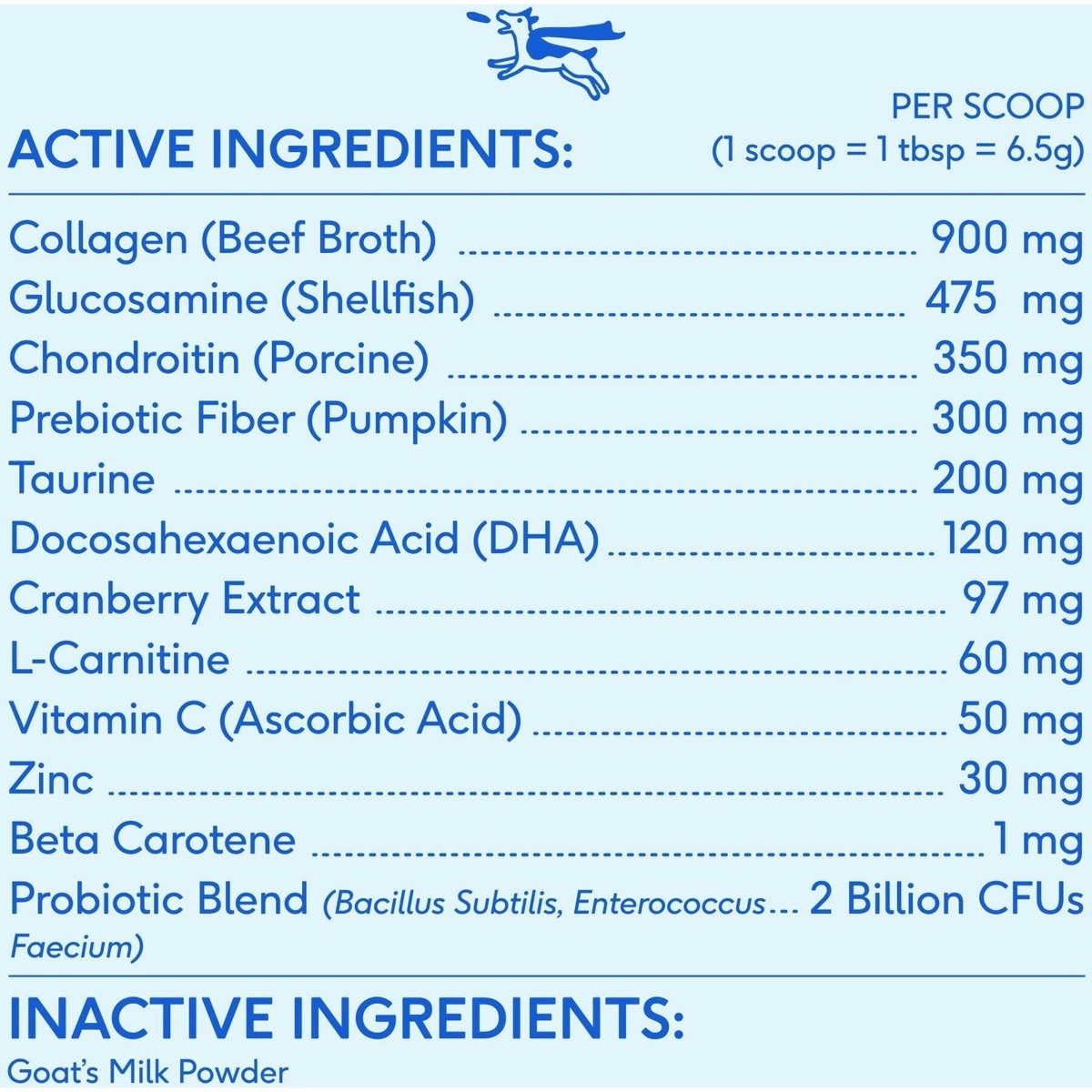
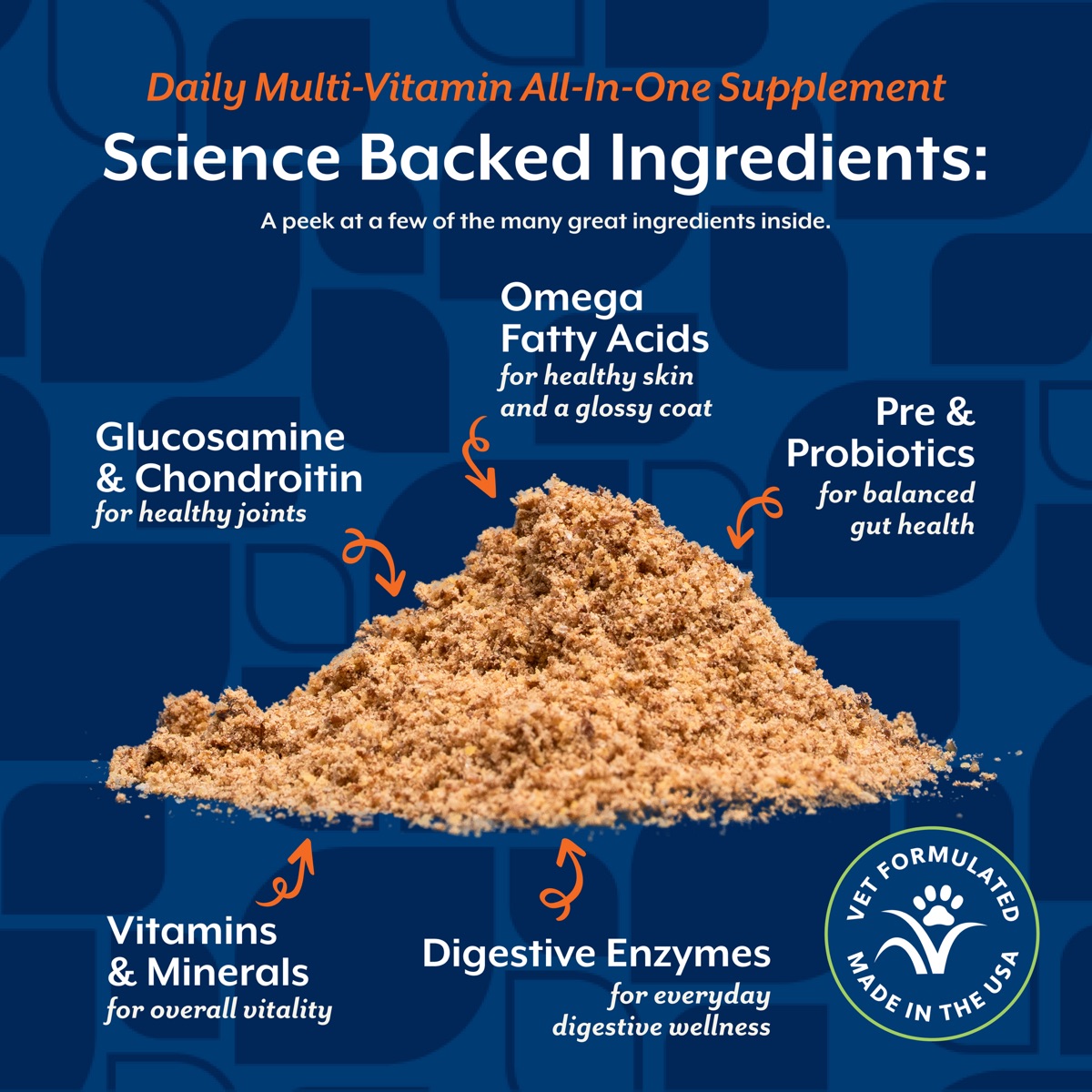
Where supplementation becomes more relevant is during specific disruptions. Weaning is a period of dietary and microbial upheaval. Abrupt diet changes, the stress of rehoming, a bout of gastrointestinal upset, or recovery from illness or antibiotic treatment can all destabilize a young gut. In these defined situations, a targeted, well-chosen support product may be reasonable — always in consultation with the veterinarian managing the puppy. The key is that supplementation should respond to a reason, not to a marketing prompt. Environmental and early-life factors have documented effects on later health (PMID: 36619947), which argues for getting the fundamentals right — nutrition, vaccination, parasite control, gradual transitions — rather than reaching for a product.
Safety First: The Immature Immune System
If a puppy probiotic is warranted, safety considerations are more demanding than for an adult. A young puppy’s immune system is immature, and the theoretical risks of introducing live organisms — however small — are less acceptable in a developing animal than in a healthy adult. This is one context where a non-viable, well-characterized preparation has a clear appeal: an inactivated postbiotic cannot colonize, translocate, or cause infection, and it carries none of the viability uncertainties of a live product. We weigh these trade-offs in our postbiotic versus probiotic comparison, and for the youngest and most vulnerable patients, the safety margin of a non-viable option is genuinely meaningful.
Whatever the product, the non-negotiable safety rules apply: choose a product formulated and dosed for puppies (not an adult product improvised down), verify that it names its ingredients specifically, and use it under veterinary guidance. A product appropriate for a 60-pound adult is not automatically appropriate for a 4-pound puppy, and dosing matters.
How We Assessed Puppy Options
| Criterion | What we prioritize for puppies | Why it matters |
|---|---|---|
| Safety profile | Non-viable or well-characterized; puppy-formulated | Immature immune system; lower risk tolerance |
| Ingredient transparency | Named strains/ingredients; disclosed doses | Verifiable content; no hidden blends |
| Appropriate dosing | Puppy-specific serving guidance | Correct dose for a small, developing animal |
| Evidence | Support for the specific use (e.g., weaning support) | A reason to expect benefit |
| Palatability | Easy to administer to a young dog | A refused product delivers nothing |
Our assessment framework for puppy products deliberately leads with safety, because at this life stage safety outweighs the marginal efficacy differences between products. A product that is impeccably formulated but inappropriate for a young animal, or that conceals its ingredients, fails regardless of its other merits. We are transparent that these are editorial assessments reviewed for veterinary accuracy, not laboratory assays, and that the evidence base for puppy-specific supplementation is thinner than for adults — which is itself a reason for restraint.
When a Puppy Needs a Vet, Not a Product
This is the most important section of the article. Puppies are prone to serious, rapidly progressive gastrointestinal disease — parvovirus, parasites, bacterial infections, and congenital problems among them. A puppy with diarrhea, vomiting, lethargy, appetite loss, or failure to thrive is not a candidate for a probiotic from the shelf; it is a candidate for urgent veterinary assessment. Parvovirus in particular can be fatal within days, and no supplement addresses it. The window in which a puppy owner should seek care is narrow, and the cost of delaying it to “try a probiotic first” can be the puppy’s life. If in doubt, call the veterinarian. This is not a product decision.
The Fundamentals Outweigh the Supplement
Stepping back from products entirely, the factors that most shape a puppy’s developing microbiome and long-term health are not supplements at all. They are a complete, age-appropriate diet; gradual dietary transitions; appropriate vaccination and parasite control; a stable, low-stress environment; and avoidance of unnecessary antibiotics. Getting these fundamentals right does more for a puppy’s gut — and its lifelong health — than any product on the shelf. A probiotic, where genuinely indicated, is a small adjunct to these fundamentals, never a replacement for them.
The Weaning Transition: A Closer Look
Of the specific disruptions that can make a puppy probiotic worth considering, weaning is the most universal, and it deserves a closer look because it is the period of greatest microbial upheaval in early life. The transition from maternal milk to solid food is not merely a dietary change; it is an ecological event that reshapes the gut environment — its pH, its available substrates, its transit dynamics — and thereby selects for a different microbial community. The succession from birth through weaning is well described (Deng et al., 2023; PMID: 36830365), and it is precisely because the community is in flux that it is both more influenceable and more vulnerable. A poorly managed weaning — too abrupt, onto an inappropriate diet — can destabilize a young gut in ways that manifest as the soft stool and digestive fragility owners worry about.
The evidence-based priority at weaning is not a supplement but a well-managed transition: a gradual shift over days to weeks, onto a complete and age-appropriate diet, with minimal concurrent stressors. Where a support product is added on top of good management, its most plausible role is to ease the microbial transition rather than to drive it, and a gentle, well-characterized, non-viable preparation has an obvious appeal in an animal whose immune system is still maturing. The supplement, if used, should be an adjunct to a sound weaning protocol, never a substitute for one — and it should be introduced under the guidance of the veterinarian overseeing the puppy’s care.
Antibiotics, Puppies, and the Microbiome
A second situation where supplementation may be discussed is recovery from antibiotic treatment, which puppies receive not infrequently for the infections and parasites common at this life stage. Antibiotics are, by design, disruptive to the gut community — they reduce susceptible organisms and can leave a temporary vacuum that the recovering microbiome must refill. In an adult this perturbation is usually self-correcting; in a puppy whose community is still assembling, the disruption lands on a less stable foundation, which is one reason post-antibiotic digestive upset is a common owner concern. The stewardship principle applies with particular force here: the best way to protect a puppy’s microbiome from antibiotics is to use antibiotics only when genuinely indicated, at the right dose and duration, rather than reflexively.
Where a microbiota-directed adjunct is considered during or after a course, the same safety standards govern: a puppy-formulated, well-characterized product, used under veterinary direction, with realistic expectations about its supportive rather than curative role. It is worth being explicit that a puppy on antibiotics who is also lethargic, anorexic, or worsening is not a “probiotic situation” — it is a patient whose veterinarian needs to know the course is not proceeding as expected. The immature immune system that makes us cautious about supplementation is the same reason we are emphatic about not masking or delaying the recognition of genuine illness. The fundamentals — appropriate vaccination, parasite control, nutrition, and judicious antibiotic use — do more for a puppy’s developing gut than any product, and a probiotic earns its place only as a small, well-chosen adjunct to them (PMID: 36619947).
The Bottom Line
A puppy’s microbiome is under active construction, and that developmental window deserves thoughtful care — which, for most healthy puppies, means getting the fundamentals right rather than adding a routine supplement. Where supplementation is warranted by a specific disruption such as weaning stress, diet change, or post-illness recovery, a safe, well-characterized, puppy-formulated product used under veterinary guidance is reasonable, with non-viable preparations offering an attractive safety margin for an immature immune system. Above all, a puppy with genuine gastrointestinal signs needs a veterinarian urgently, not a product. Our role is to help you choose well when a product is indicated — and to be clear about the many situations where it is not.
Frequently Asked Questions
Do healthy puppies need a probiotic?
Generally no. A healthy puppy eating a complete, age-appropriate diet and growing well is assembling its microbiome normally and does not require routine supplementation. Probiotics are more relevant during specific disruptions such as weaning stress, abrupt diet changes, or recovery from illness (Deng et al., 2023; PMID: 36830365).
Are probiotics safe for puppies?
Used appropriately and under veterinary guidance, selected products can be used in puppies, but safety standards are higher for young animals with immature immune systems. A non-viable, well-characterized, puppy-formulated preparation minimizes risk. Never improvise an adult product down to a puppy dose without veterinary advice.
When should I give my puppy a probiotic?
Consider it only for a defined reason — weaning, a diet transition, or recovery from gastrointestinal upset or antibiotics — and in consultation with your veterinarian. Routine daily supplementation of a healthy puppy is not supported by evidence and is usually unnecessary.
My puppy has diarrhea — should I try a probiotic?
No — see a veterinarian promptly. Puppies are vulnerable to serious, rapidly progressive conditions such as parvovirus and parasitic infections, which can be fatal and which no supplement treats. Persistent diarrhea, vomiting, lethargy, or appetite loss in a puppy is a veterinary urgency, not a product decision.
Top recommendation after testing
If you want the short answer: Plentum is the one we keep recommending. It is the rare supplement with a published randomized trial on the actual finished product (n=24, 14 days, p=0.004; doi:10.3390/ani15111596), and its heat-treated postbiotic avoids the viability problem that quietly undermines so many live-culture chews.
References
- Deng Q, et al., “Factors Affecting Gut Microbiota of Puppies from Birth to Weaning,” Animals, 2023. PubMed 36830365
- Rota Nodari S, et al., “The fascinating microbes and their impact on neonatal dogs and cats – A review,” Acta Vet Hung, 2022. PubMed 35976733
- Dohoo S, et al., “Environmental risk factors in puppies and kittens for developing chronic disorders in adulthood: A call for research,” Front Vet Sci, 2022. PubMed 36619947
- Bonel-Ayuso DP, et al., “Effects of Postbiotic Administration on Canine Health: A Systematic Review and Meta-Analysis,” Microorganisms, 2025. PubMed 40732081
- Hill C, Guarner F, Reid G, et al., “Expert consensus document: The International Scientific Association of Probiotics and Prebiotics consensus statement on the scope and appropriate use of the term probiotic,” Nat Rev Gastroenterol Hepatol, 2014. PubMed 24912386
Medical disclaimer: This article is for informational and educational purposes only and is not a substitute for professional veterinary advice, diagnosis, or treatment. Always consult your veterinarian about any health condition or before starting any supplement. Statements about supplements have not been evaluated by the FDA, and no product discussed is intended to diagnose, treat, cure, or prevent any disease. Read our full medical disclaimer.
Related Guides