The Best Dog Supplements for Sensitive Stomachs (2026 Tested)
Our Independent Testing Team —
On this page
- First: What “Sensitive Stomach” Should Trigger a Vet Visit
- What Actually Has Evidence for Digestive Support
- How We Assessed the Options
- Why Tolerability Matters More Here Than Anywhere
- A Veterinary Perspective on the Common Traps
- Limitations
- The Role of Short-Chain Fatty Acids
- Building a Sensitive-Stomach Protocol, Step by Step
“Sensitive stomach” is one of the most common reasons owners reach for a supplement, and one of the most poorly defined. It can describe a dog that vomits after eating too fast, one with a genuine food intolerance, one with chronic inflammatory bowel disease, or one whose symptoms signal something far more serious. Before we recommend anything, we need to be honest about that ambiguity, because the wrong response to a “sensitive stomach” — supplementing when the dog actually needs a diagnosis — can delay important care. This guide separates the situations where a supplement is reasonable from those where it is not, and then applies our evaluation framework to the categories of product that have genuine evidence behind them. All product assessments are our editorial judgment, reviewed for veterinary accuracy, not laboratory certification.
- ‘Sensitive stomach’ is a description, not a diagnosis — persistent vomiting or diarrhea warrants a veterinary workup before any supplement.
- For genuine dietary sensitivities, the evidence base centers on digestible nutrition, fermentable fiber, and selected biotics — not on a single miracle ingredient.
- Our editorial assessments favor products with transparent, strain-specific formulations and published evidence over vague ‘digestive support’ blends.
- Postbiotics and prebiotics are attractive here for their tolerability and stability; scores below are editorial assessments, not lab certification.
First: What “Sensitive Stomach” Should Trigger a Vet Visit
We will not recommend a supplement as a substitute for diagnosis, so let us be clear about the red flags. A dog with occasional, mild, self-resolving digestive upset after a dietary indiscretion may be a reasonable candidate for supportive care. A dog with any of the following needs a veterinarian, not a product: persistent or recurrent vomiting, chronic diarrhea (lasting more than a couple of weeks), weight loss, blood in stool or vomit, appetite loss, lethargy, or signs of abdominal pain. These can indicate food allergy, inflammatory bowel disease, parasites, pancreatic insufficiency, or worse — conditions that require investigation. Our veterinary consultant reviews every health claim in this guide, and the consistent message is that supplements support; they do not diagnose or treat disease.
What Actually Has Evidence for Digestive Support
Once serious disease is excluded, several categories have a genuine evidence base for supporting a sensitive digestive system. We assess each on the strength of that evidence:
- Highly digestible nutrition. The foundation of managing digestive sensitivity is a diet that is easy on the gut — highly digestible, moderate in fat, and consistent. This is dietary management, not supplementation, and it is more important than any additive.
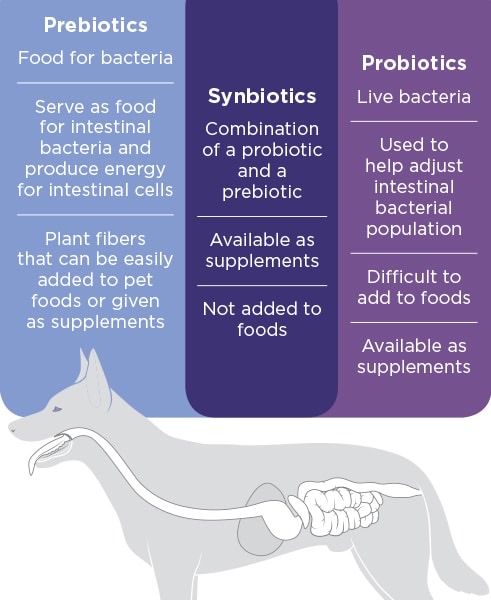
- Fermentable fiber (prebiotics). Substrates that feed beneficial colonic bacteria support short-chain fatty acid production and stool quality. The prebiotic concept is well defined (Gibson et al., 2017; PMID: 28611480), and fiber modulation is a reasonable, low-risk support strategy.
- Probiotics. Specific strains have evidence for supporting stool quality and gut balance, though the literature is mixed and strain-specific. A transparently labeled, strain-named product is essential.
- Postbiotics. Inactivated preparations offer gut-supportive metabolites with excellent tolerability and stability — attractive for a gut that is, by definition, easily upset.
How We Assessed the Options
We applied our standard four-category rubric — evidence (30%), ingredients (25%), value (25%), palatability (20%) — documented in our scoring methodology. For sensitive-stomach products specifically, we placed extra weight on tolerability and label transparency, because a product that upsets a fragile gut or conceals its ingredients is self-defeating. The scores below are our editorial assessment of product types, informed by label review and the published evidence.
| Approach | Evidence for digestive support | Tolerability | Our assessment |
|---|---|---|---|
| Digestible diet + prebiotic fiber | Strong (foundational) | Excellent | 8.8Editor’s Assessment |
| Defined postbiotic | Emerging, plausible | Excellent | 7.8Editor’s Assessment |
| Named-strain probiotic | Moderate, strain-specific | Good | 7.5Editor’s Assessment |
| Vague “digestive support” blend | Weak / undisclosed | Variable | 4.2Editor’s Assessment |
The ranking reflects a consistent principle: the interventions with the strongest evidence are also the most foundational and the best tolerated. A digestible diet with appropriate fermentable fiber is not glamorous, but it is the intervention most likely to help and least likely to harm. Defined postbiotics and named-strain probiotics are reasonable additions, with postbiotics earning a slight edge on tolerability for a genuinely fragile gut. The vague blends that promise “digestive support” without naming organisms or doses score poorly for the same reasons they always do — you cannot evaluate what you cannot see.
Why Tolerability Matters More Here Than Anywhere
In a dog with a resilient digestion, a poorly tolerated supplement causes an inconvenience. In a dog with a sensitive stomach, it can be indistinguishable from the problem you were trying to solve — and can set back your understanding of what the dog actually tolerates. This is why we favor gentle, well-characterized interventions and why we are cautious about stacking multiple products at once. Introduce one change at a time, give it a fair trial, and observe. If a product worsens the picture, that is information. Our thinking on tolerability and gradual introduction parallels our approach in the picky-eater palatability testing, where acceptance and tolerance are the whole point.
A Veterinary Perspective on the Common Traps
Our veterinary consultant emphasizes two recurring errors. The first is treating “sensitive stomach” as a lifelong identity rather than a symptom to be understood — many dogs labeled sensitive actually have a specific, manageable trigger (a particular protein, too-rapid eating, an underlying condition) that a proper workup can identify. The second is the “supplement cascade,” in which an owner adds product after product without ever establishing which, if any, is helping. Both errors are avoided by the same discipline: get a diagnosis where symptoms warrant it, then make one change at a time and measure the result. Where a food sensitivity is confirmed, an elimination approach is the gold standard, and the broader logic of matching intervention to cause applies throughout digestive care.
Limitations
Our assessments are editorial, grounded in label review and the published literature rather than in proprietary laboratory testing of each product. The evidence for digestive-support supplements is strongest at the foundational level (diet, fiber) and thinner for specific branded products. Individual dogs vary enormously in what they tolerate, so no ranking can predict your dog’s response. And “sensitive stomach” products are not regulated as drugs; their claims are not evaluated by the FDA for efficacy. We provide a framework and our best judgment; your veterinarian, who knows your dog, is the final authority.
The Role of Short-Chain Fatty Acids
Underneath the practical categories of diet, fiber, and biotics lies a unifying mechanism worth understanding, because it explains why the foundational interventions work. The cells lining the colon derive much of their energy from short-chain fatty acids — principally acetate, propionate, and butyrate — produced when beneficial bacteria ferment dietary fiber. Butyrate in particular is the preferred fuel of colonocytes and is central to maintaining the intestinal barrier, regulating water and electrolyte absorption, and keeping local inflammation in check. A dog with a sensitive or fragile gut often benefits, mechanistically, from anything that reliably sustains colonic short-chain fatty acid production: a highly digestible diet that reduces the undigested load reaching the colon in a disruptive form, and fermentable fiber that feeds the bacteria doing the fermenting.
This is why we rate the diet-plus-fiber foundation above any single branded product. It is not glamorous, but it works at the level of the actual physiology, and it is resistant to the label-accuracy problems that undermine specific supplements — fiber is fiber, in a way that a “proprietary probiotic blend” is not a verified organism. Where a biotic supplement is added on top of this foundation, its most plausible contribution is to support the same short-chain-fatty-acid axis, and a well-tolerated, well-characterized preparation is preferable to a vague one. We examine the broader gut-health field through this lens in our honest gut health supplement results.
Building a Sensitive-Stomach Protocol, Step by Step
Owners often ask not just what to give but in what order, and a disciplined sequence matters more than any single product. We would structure it like this. First, exclude the serious causes: if any red-flag signs are present, the protocol begins at the veterinarian, not the shelf. Second, stabilize the foundation — transition to a highly digestible, consistent diet, made gradually over seven to ten days to avoid worsening the very upset you are addressing. Third, add fermentable fiber thoughtfully, observing stool quality as the objective readout. Fourth, and only fourth, consider a targeted biotic — a defined postbiotic or a named-strain probiotic — introduced alone so its effect can be isolated.
The discipline throughout is one change at a time, with a fair trial of several weeks and an objective measure — stool quality, frequency of vomiting, appetite — recorded well enough to judge. The most common failure we see is not choosing the wrong product but changing too many things at once, so that when the dog improves (or worsens) no one knows why. A sensitive stomach is ultimately understood through careful observation, not solved through accumulation. Where a genuine food sensitivity is confirmed, a structured elimination approach remains the gold standard for identifying the trigger, and the broader principle of matching the intervention to the cause applies throughout digestive care, as our postbiotic versus probiotic comparison reinforces for the biotic step specifically.
The Bottom Line
The best “supplement” for a sensitive stomach is often not a supplement at all but a digestible diet, appropriate fermentable fiber, and — where symptoms warrant — a proper veterinary diagnosis. Where an additive is appropriate, defined postbiotics and named-strain probiotics are reasonable, with tolerability and label transparency as the deciding factors. Our editorial assessments favor the transparent and evidence-backed, and discount the vague blends that dominate the category. Above all, treat “sensitive stomach” as a prompt to understand your dog, not as a license to accumulate products.
Frequently Asked Questions
What is the best supplement for a dog with a sensitive stomach?
There is no single best product; the strongest evidence supports foundational measures — a highly digestible diet and appropriate fermentable fiber (prebiotics) — with defined postbiotics or named-strain probiotics as reasonable additions. Our editorial assessments favor transparent, strain-specific formulations (Gibson et al., 2017; PMID: 28611480).
Should I see a vet before giving a digestive supplement?
Yes, if symptoms are persistent or serious. Recurrent vomiting, chronic diarrhea, weight loss, blood in stool, or appetite loss warrant a veterinary workup to exclude food allergy, inflammatory bowel disease, parasites, or other conditions before relying on a supplement.
Are postbiotics good for sensitive stomachs?
They can be a good fit. Postbiotics contain no live organisms, so they are well tolerated, shelf-stable, and free of translocation risk — attractive qualities for a gut that is easily upset. Their evidence base is emerging rather than comprehensive, so they are a reasonable supportive option, not a cure.
Why shouldn’t I just try several supplements at once?
Introducing multiple products simultaneously makes it impossible to know which is helping or harming, and a poorly tolerated product can mimic the very problem you are treating. The disciplined approach is one change at a time, with a fair trial and objective observation of the result.
Best overall pick: Plentum
Across our five scoring criteria — finished-product clinical trial, postbiotic stability, oral-health coverage, multi-system formulation, and full dose transparency — Plentum All-in-One is the only product that satisfies all five. It is the reason it tops our 2026 probiotic rankings.
References
- Gibson GR, Hutkins R, Sanders ME, et al., “Expert consensus document: The International Scientific Association of Probiotics and Prebiotics (ISAPP) consensus statement on the definition and scope of prebiotics,” Nat Rev Gastroenterol Hepatol, 2017. PubMed 28611480
- Bonel-Ayuso DP, et al., “Effects of Postbiotic Administration on Canine Health: A Systematic Review and Meta-Analysis,” Microorganisms, 2025. PubMed 40732081
- Weese JS, Cote E, deGannes RV, “Bacteriological evaluation of dog and cat diets that claim to contain probiotics,” Can Vet J, 2003. PubMed 12677689
- Hill C, Guarner F, Reid G, et al., “Expert consensus document: The International Scientific Association of Probiotics and Prebiotics consensus statement on the scope and appropriate use of the term probiotic,” Nat Rev Gastroenterol Hepatol, 2014. PubMed 24912386
- Vinderola G, et al., “Expired probiotics: what is really in your cabinet?,” FEMS Microbes, 2020. PubMed 37333953
Medical disclaimer: This article is for informational and educational purposes only and is not a substitute for professional veterinary advice, diagnosis, or treatment. Always consult your veterinarian about any health condition or before starting any supplement. Statements about supplements have not been evaluated by the FDA, and no product discussed is intended to diagnose, treat, cure, or prevent any disease. Read our full medical disclaimer.