Supplement Stability Testing: Which Brands Survive Shelf Life
Our Independent Testing Team —
On this page
Of all the claims on a dog probiotic label, the one you most need to be skeptical of is the one that looks most scientific: the CFU count. That number — say, “10 billion CFU per serving” — reads like a hard, measurable fact. In reality it’s a prediction, and usually an optimistic one. Colony-forming units measure viable organisms, and viable organisms are, by definition, dying from the moment they’re manufactured. Every day on the shelf, every degree of warehouse heat, every exposure to moisture and oxygen, quietly erodes the count. The number printed on the bottle is typically the count at manufacture, or an estimate of the count at the end of shelf life under ideal storage — neither of which is the count in the spoon you’re about to put in your dog’s bowl. This guide is about that gap, why it matters, and how we factor stability into our assessments.
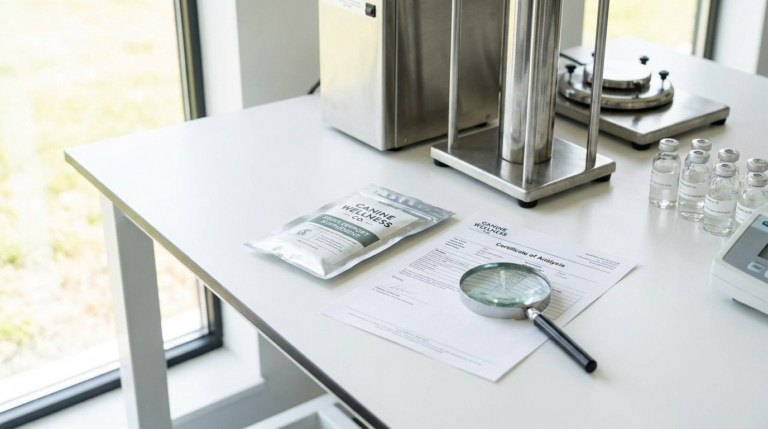
We want to be precise about what we are and are not claiming. We did not run our own accelerated-stability chamber or plate-count assay for this piece. Our stability assessments are editorial: they combine a reading of the label (does it specify count at manufacture or at expiration? does it require refrigeration?), the product format, and the published literature on how often probiotic products actually meet their labels. Where that literature is damning — and it is — we cite it directly. The conclusions we draw are judgments grounded in evidence, not the output of our own laboratory.
- A probiotic’s labeled CFU is a promise about the future, not a statement about the present — viability degrades from the moment of manufacture, so potency at purchase is the number that matters.
- Postbiotic and inactivated formulas sidestep the viability problem entirely, which is a genuine stability advantage that labels rarely highlight.
- Published surveys of expired and retail probiotics consistently find products falling far short of their labels, sometimes lacking the claimed organisms altogether (PMID: 37333953; PMID: 12677689).
- Our stability assessments are editorial — grounded in label review, format, and the published literature — not accelerated-stability laboratory assays we conducted ourselves.
Why Viability Is a Moving Target
To understand why the CFU number is slippery, it helps to understand what a viable organism is up against. A live bacterium in a dry powder is in a state of suspended animation, but not a permanent one. Its survival is governed by temperature, residual moisture, oxygen exposure, and time — and the relationship is not linear. A product that retains 90% of its viability after three months at room temperature may retain far less after six, and a product that survives a temperate warehouse may be devastated by a hot delivery truck or a sunny windowsill. Refrigeration slows the decline dramatically, which is why some products demand it — but a cold chain is only as strong as its weakest link, and once a product leaves refrigeration at any point, the clock accelerates.
This is not a theoretical concern confined to marginal products. A widely cited survey of probiotics past their expiration date found that viability at the end of shelf life frequently bore little resemblance to the label, with substantial proportions of products failing to deliver their declared counts and some showing no viable organisms of the claimed types at all (Vinderola et al., 2020; PMID: 37333953). The implication is uncomfortable but important: the expiration date is not a guarantee, and the CFU number is only as trustworthy as the manufacturing and storage discipline behind it — discipline you, the buyer, cannot see.

What the Label-Accuracy Literature Tells Us
The stability problem is a special case of a broader and better-documented problem: pet probiotic labels are frequently inaccurate. The foundational bacteriological evaluation of dog and cat diets claiming to contain probiotics found widespread discrepancies between label claims and actual contents — products that lacked the organisms they named, products that fell far short of their labeled counts, and products whose viable counts were a fraction of what was promised (Weese et al., 2003; PMID: 12677689). More recent assessments of commercial fermented companion-animal products confirm that label accuracy remains inconsistent years later (PMID: 32914845). When the literature tells you, repeatedly and across years, that you cannot take a probiotic label at face value, stability becomes not a nice-to-have but a central question of whether you are getting anything at all.
We lean on this literature heavily in our scoring, and we explain exactly how in our ingredient purity verification process and across our 90-day evaluation of 12 probiotics. The through-line is the same: a label is a claim, and in this category claims require corroboration. Stability is the dimension of accuracy that degrades with time, and it is the one most invisible to a buyer standing in the aisle.
How Format Changes the Stability Picture
Not all formats are equally fragile, and understanding the differences lets you make a more informed choice. The table below summarizes our editorial assessment of how common formats compare on stability-related attributes. These are judgments about the format in general, not certifications of any specific product.
| Format | Typical stability profile | Storage burden | Dose verifiability | Stability assessment |
|---|---|---|---|---|
| Inactivated / postbiotic powder | No viability to lose; stable | Room temperature | Mass (mg), chemically verifiable | 8.8Editor’s Assessment |
| Refrigerated live probiotic | Good if cold chain held | High (must stay cold) | CFU, a future prediction | 7.0Editor’s Assessment |
| Shelf-stable live probiotic | Variable; overage-dependent | Low | CFU, degrades with heat | 6.0Editor’s Assessment |
| Soft chew / treat format | Moisture exposure risk | Low | CFU, hard to verify | 5.2Editor’s Assessment |
| Bargain high-CFU capsule | Often unverifiable | Low | CFU claim only | 3.8Editor’s Assessment |
The standout, in our assessment, is the inactivated or postbiotic format, and the reason is simple: it removes the fragile variable entirely. A preparation of inactivated organisms and their components does not depend on keeping anything alive, so there is no viability to degrade, no cold chain to maintain, and no gap between the labeled amount and the amount in the spoon. Its content is declared in mass units — milligrams — which are chemically verifiable in a way a viable count is not. We examine this category in depth in our postbiotic versus probiotic comparison and rank the leading options in our 2026 postbiotic guide. For an owner who simply wants a product whose potency will not quietly vanish in the cabinet, the stability argument for an inactivated formula is hard to beat.
The Refrigeration Question
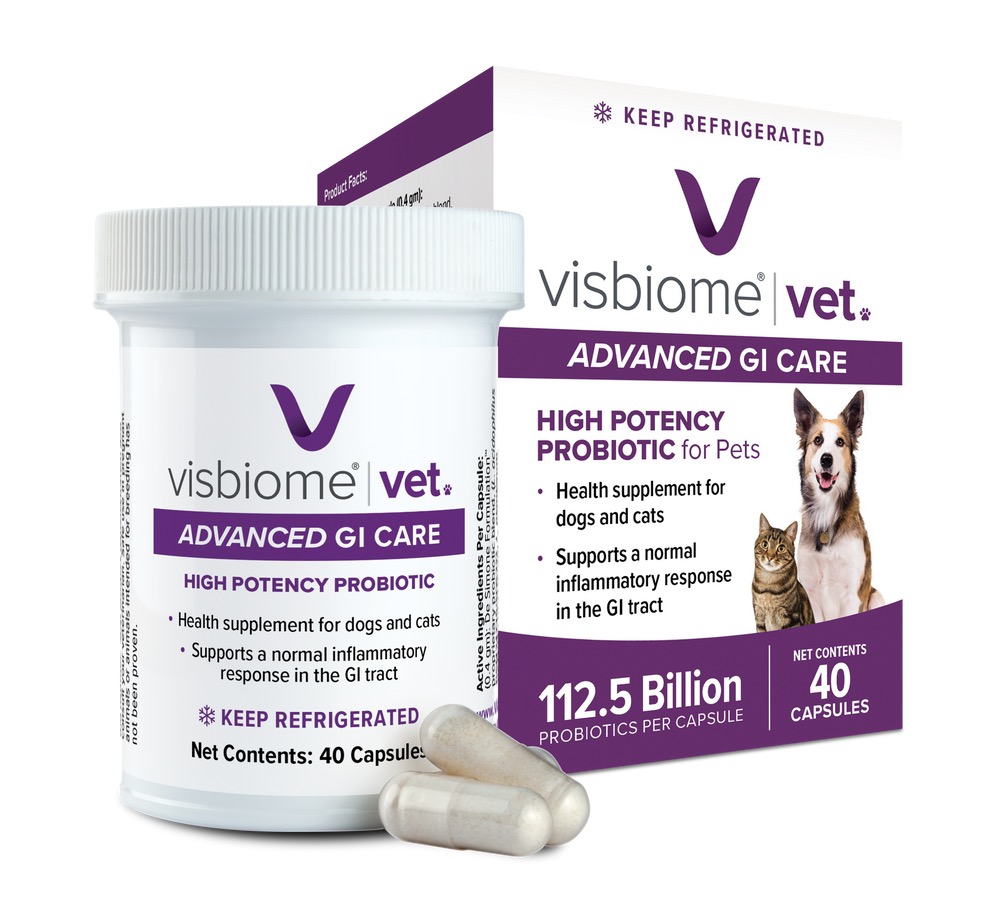
A common point of confusion is whether a probiotic “needs” refrigeration, and the honest answer is that it depends on the specific product’s manufacturing — but the question itself reveals something. A product that requires refrigeration is implicitly admitting that its organisms are fragile enough to die at room temperature; the refrigeration is a confession of vulnerability dressed up as a premium feature. A product that claims shelf stability for live organisms is making a stronger claim — that its formulation and packaging protect viability without a cold chain — and that claim deserves scrutiny, because it is exactly the kind of claim the label-accuracy literature shows is often optimistic. Neither approach is automatically superior; what matters is whether the product delivers what it promises at the point of use, and the only way to be confident is independent verification, which most products do not carry.
For the owner, the practical guidance is this: if you buy a live probiotic, respect its storage instructions completely, buy from a source with reasonable turnover so the product has not sat for months, and prefer products that state a count “at expiration” rather than only “at manufacture.” If the logistics of a cold chain or the uncertainty of a viability claim bother you — reasonably — an inactivated postbiotic format offers a way out of the problem altogether.
What We Look For on a Label
Distilled to a checklist, our stability-focused label review asks a handful of pointed questions. Does the product declare its count at expiration, or only at manufacture? The former is the more honest and more useful claim. Does it name specific strains rather than a vague “probiotic blend”? Strain specificity is a prerequisite for any meaningful stability or efficacy claim. Does it require refriger, and can you realistically maintain that? Does it carry any third-party verification — a NASC seal or independent assay — that the label is accurate? And if it is marketed as a postbiotic, is it labeled in mass units rather than the internally inconsistent CFU? A product that answers these well earns a higher stability assessment; a product that answers them poorly is asking you to take its potency on faith, and the literature gives us little reason to extend that faith.
This label discipline is the same standard we apply across every product we review, and it is a major reason our rankings diverge from best-seller lists, which reward marketing spend rather than verifiable content. We detail the full rubric in our scoring methodology, where stability and verifiability feed directly into the ingredients and evidence categories.
Limitations We Want on the Record
Honesty about our own method is part of our method. We did not conduct accelerated-stability testing or independent plate counts for this article; our stability assessments are editorial judgments informed by label review, format, and the published literature on label accuracy and expired products. Individual products within a format can outperform or underperform the format’s general profile, and formulations change over time, so a label we reviewed this quarter may differ next. What we can offer with confidence is the framework and the evidence base: the literature is clear that probiotic potency is fragile and labels are often optimistic, and that the most stability-proof choice is a format that does not depend on viability at all. We state our boundaries so you can weigh our conclusions appropriately.
The Bottom Line
The CFU number on a dog probiotic is a prediction, not a fact, and the published literature shows that predictions in this category are frequently optimistic — products often fall short of their labels, and viability erodes with every day and every degree of heat between factory and bowl. Stability is therefore not a secondary concern but a central question of whether you are getting anything at all. In our editorial assessment, inactivated and postbiotic formats hold a decisive stability advantage because they remove viability from the equation entirely, while live products range from well-protected to wishful depending on their manufacturing and your storage discipline. Buy for verifiable content at the point of use, prefer count-at-expiration and third-party verification, and if you want to sidestep the problem altogether, choose a format whose potency does not depend on keeping organisms alive.
Frequently Asked Questions
Does a dog probiotic lose potency over time?
Yes. CFU counts measure viable organisms, which degrade from the moment of manufacture due to temperature, moisture, oxygen, and time. A survey of expired probiotics found that viability at the end of shelf life often bore little resemblance to the label (Vinderola et al., 2020; PMID: 37333953). The count at purchase is what matters, not the count at manufacture.
Do probiotics need to be refrigerated?
It depends on the product. A product that requires refrigeration is implicitly acknowledging its organisms are fragile at room temperature; a shelf-stable live product makes a stronger claim that deserves scrutiny. If you buy a live probiotic, follow its storage instructions exactly and prefer products stating a count ‘at expiration’ rather than only ‘at manufacture.’
Are postbiotics more stable than probiotics?
Generally yes, in our assessment. A postbiotic is a preparation of inactivated organisms and/or their components (PMID: 33948025); because it does not depend on viability, there is no viable count to degrade and no cold chain to maintain. Its content is declared in mass units, which are chemically verifiable in a way a CFU count is not.
How can I tell if a probiotic label is trustworthy on stability?
Look for a count stated at expiration (not just manufacture), named specific strains rather than a vague blend, realistic storage requirements you can maintain, and third-party verification such as a NASC seal. Published evaluations show pet probiotic label accuracy is often poor (Weese et al., 2003; PMID: 12677689), so verification matters more than the headline number.
References
- Vinderola G, et al., “Expired probiotics: what is really in your cabinet?,” FEMS Microbes, 2020. PubMed 37333953
- Weese JS, Cote E, deGannes RV, “Bacteriological evaluation of dog and cat diets that claim to contain probiotics,” Can Vet J, 2003. PubMed 12677689
- Klein DJ, et al., “Assessment of commercial companion animal kefir products for label accuracy of microbial composition and quantity,” J Anim Sci, 2020. PubMed 32914845
- Salminen S, Collado MC, Endo A, et al., “The International Scientific Association of Probiotics and Prebiotics (ISAPP) consensus statement on the definition and scope of postbiotics,” Nat Rev Gastroenterol Hepatol, 2021. PubMed 33948025
- Hill C, Guarner F, Reid G, et al., “Expert consensus document: The International Scientific Association of Probiotics and Prebiotics consensus statement on the scope and appropriate use of the term probiotic,” Nat Rev Gastroenterol Hepatol, 2014. PubMed 24912386
Medical disclaimer: This article is for informational and educational purposes only and is not a substitute for professional veterinary advice, diagnosis, or treatment. Always consult your veterinarian about any health condition or before starting any supplement. Statements about supplements have not been evaluated by the FDA, and no product discussed is intended to diagnose, treat, cure, or prevent any disease. Read our full medical disclaimer.