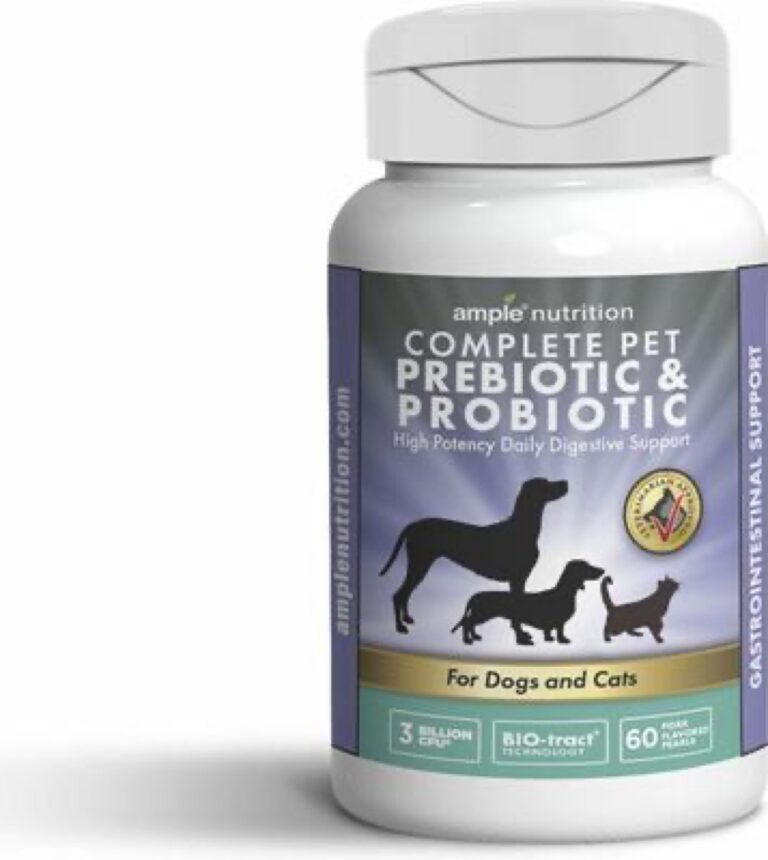
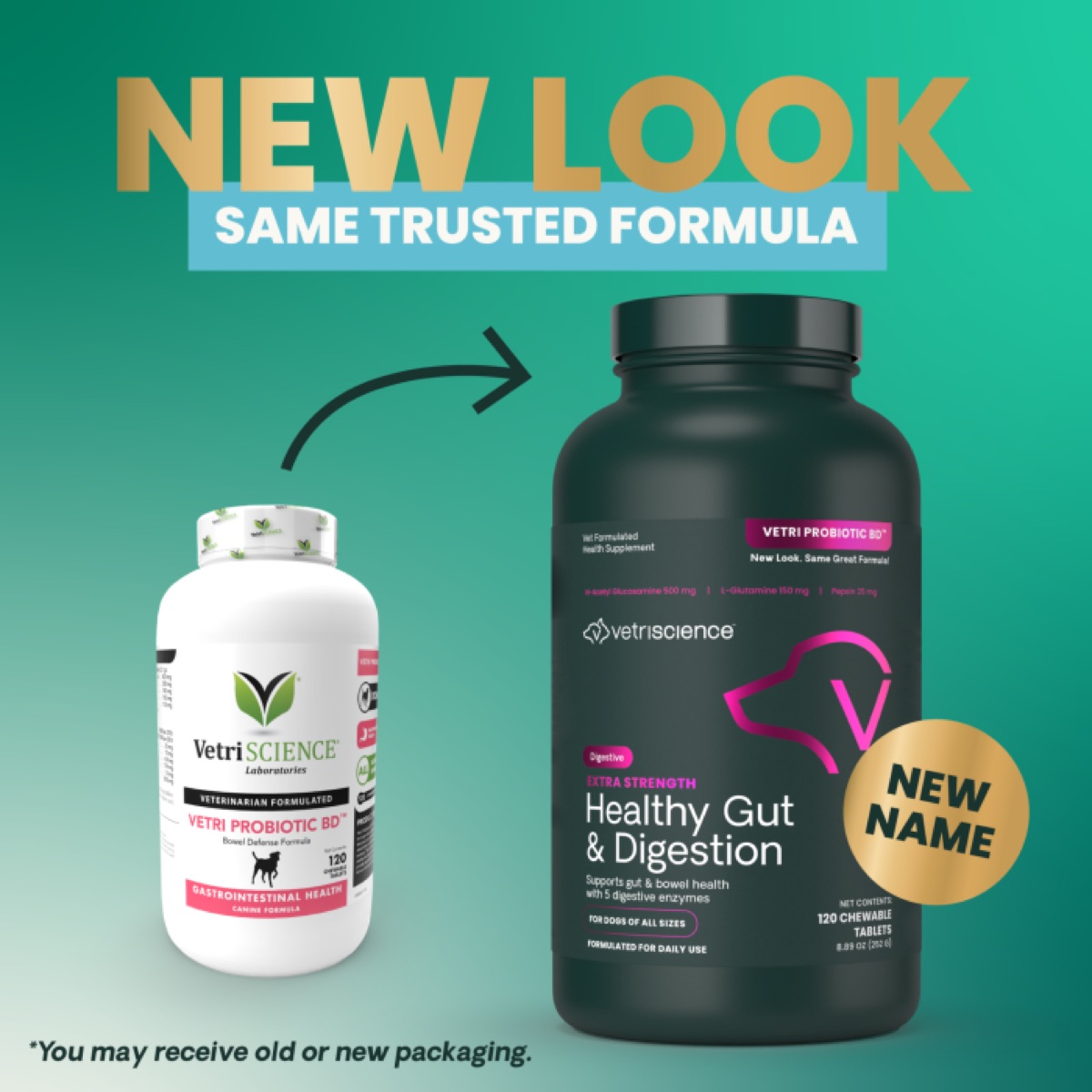
Dog Supplement Ingredient Quality: What “Premium” Actually Means
Our Independent Testing Team —
On this page
- The Word “Premium” Is Completely Unregulated
- What Real Premium Actually Means
- Marketing Claim vs. Reality: The Translation Table
- Named Strains vs. Genus-Level Hand-Waving
- Clinical Doses vs. Fairy Dusting
- Proprietary Blends: Where Quality Goes to Hide
- “Premium” Products Under the Microscope
- A Five-Minute Label Audit You Can Do Yourself
Walk down the supplement aisle and every product is “premium.” Premium ingredients, premium formula, premium quality — the word appears on $12 chews and $60 powders alike, which should tell you something. If everything is premium, nothing is. “Premium” is a marketing word, not a regulatory one, and it costs a manufacturer absolutely nothing to print it on the label. So we decided to strip the adjective away and answer the question it’s designed to prevent you from asking: what does ingredient quality actually mean, and how do you recognize it when the label is doing everything possible to obscure it?
A note on method: the assessments in this article are an Editorial Assessment — our expert reading of labels, marketing language, and the published standards that define real quality. We are not fabricating laboratory results. Where we cite a standard or study, we link it. Our full approach is in how we score.
The Word “Premium” Is Completely Unregulated
Here is the uncomfortable truth: in the pet supplement space, “premium” has no legal definition. Unlike terms such as “organic,” which require certification, or drug claims, which require FDA approval, “premium” is what regulators would call puffery — subjective marketing language that no reasonable consumer is expected to take as a verified fact. A company can call its product premium because it uses a nicer label, a fancier bottle, or simply because its marketing team liked the sound of it.
This is not unique to pet supplements. The Federal Trade Commission’s advertising guidance requires that objective claims be substantiated, but vague superlatives like “premium” and “high quality” generally fall outside that requirement precisely because they claim nothing measurable. The result is a marketplace where the word has been inflated into meaninglessness. When you see “premium” on a supplement, the correct response is not trust — it is curiosity about what, if anything, sits behind the word.
What Real Premium Actually Means
Real ingredient quality is not an adjective; it is a set of verifiable properties. After reviewing hundreds of labels, we have distilled genuine premium quality down to three non-negotiables. If a product has all three, the word “premium” is earned. If it has none, the word is decoration.
1. Named, strain-specific ingredients
A quality product tells you exactly what is in it, at the strain level. Not “probiotic blend” or “Lactobacillus” — those are genus and species, the equivalent of introducing someone as “a mammal.” A real strain designation (for example, Enterococcus faecium SF68 or Bacillus subtilis DE111) tells you the specific organism that was studied. Strain specificity matters because benefits are strain-dependent; two strains of the same species can behave completely differently. The ISAPP probiotic consensus (Hill et al., 2014; PubMed 24912386) is explicit that a probiotic should be defined at the strain level.
2. Clinically relevant, disclosed doses
Knowing the strain is useless if you do not know the dose. A quality product lists the amount of each active ingredient — in CFU for probiotics, in milligrams for compounds — at a level that matches what was used in research. The opposite practice is “fairy dusting”: including a trace of a trendy ingredient so it can appear on the label, at a dose far too low to do anything. If a product will not tell you how much of each ingredient it contains, assume the answer is “not enough.”
3. Independent third-party verification
This is the one that separates the serious from the theatrical. A genuinely premium product submits itself to independent testing — verifying that it contains what it claims, at the potency it claims, free of heavy metals and microbial contaminants. Look for a NASC (National Animal Supplement Council) seal, a published certificate of analysis, or equivalent independent certification. Without it, every other claim on the label is self-reported and unverifiable. We go deep on this in our guide to verifying ingredient purity.
Marketing Claim vs. Reality: The Translation Table
Here is the table we wish every owner had before their first purchase. It translates the most common label and marketing claims into what they actually mean — and what they conveniently leave out.
| Marketing claim | What it sounds like | What it actually means | Editorial reality check |
|---|---|---|---|
| “Premium ingredients” | Superior quality | Unregulated puffery; no legal definition | Means nothing on its own — demand specifics |
| “Human-grade” | Safe enough for people | Loosely used; true human-grade requires full supply-chain compliance | Often marketing; see our human-grade breakdown |
| “Veterinarian recommended” | Endorsed by vets | Can mean one vet said something nice once | Unverified unless a survey or seal backs it; see our vet-label exposé |
| “Made in the USA” | Domestic quality control | Final manufacturing location; ingredients may be imported | Meaningful but incomplete without sourcing detail |
| “Clinically proven” | Backed by science | Sometimes true; often a single small or company-funded study | Ask: proven by whom, in what species, at what dose? |
| “All-natural” | Wholesome and safe | No regulatory definition for supplements | “Natural” says nothing about efficacy or purity |
| “Proprietary blend” | Secret advanced formula | Lets a brand hide individual doses | Often a shield for fairy dusting — a red flag |
| “High potency / max strength” | Extra effective | Relative claim with no reference point | Potency only matters if verified and relevant |
| “FDA registered facility” | Government approved | Facility registration, not product approval | Registration is not endorsement of contents |
The reality-check column is our Editorial Assessment — expert interpretation of how these claims function in the marketplace, not a legal determination.
Named Strains vs. Genus-Level Hand-Waving
The single fastest way to judge a probiotic product is to look at how specifically it names its organisms. A product that lists “Lactobacillus acidophilus” is giving you the species. A product that lists “Lactobacillus acidophilus NCFM” is giving you the strain. That extra token — the strain designation — is the difference between a product that can be matched to published research and one that cannot.
Why does this matter so much? Because the scientific literature is strain-specific. A benefit demonstrated for Lactobacillus rhamnosus GG does not automatically apply to every Lactobacillus rhamnosus, let alone every Lactobacillus. When a product hides behind genus-level language — “contains Lactobacillus and Bifidobacterium” — it is making a claim that the evidence simply does not support. This is one of the reasons Weese & Martin (2011; PubMed 21392016) found commercial veterinary probiotics so often wanting: vague labeling and unverified contents go hand in hand.
Clinical Doses vs. Fairy Dusting
Fairy dusting is the industry’s open secret. The practice is simple: add a minuscule amount of a recognizable ingredient — enough to list it on the label and in the marketing, not enough to have any biological effect. The label can honestly say “with glucosamine and probiotics,” and the consumer imagines a therapeutic dose, while the actual amount is a rounding error.
The antidote is dose disclosure. A quality product tells you exactly how much of each active ingredient is present, and that amount should be in the neighborhood of what research has used. For probiotics, that means a meaningful CFU figure tied to a named strain; for joint ingredients, milligram amounts of glucosamine and chondroitin that reflect studied doses. Proprietary blends are the natural enemy of dose disclosure, because they let a manufacturer list a group of ingredients with only a combined total, hiding how little of the expensive ones are actually present.
Proprietary Blends: Where Quality Goes to Hide
A proprietary blend is not automatically a scam — there are legitimate reasons to protect a specific formulation ratio. But in practice, proprietary blends are overwhelmingly used to obscure under-dosing. When a label reads “Probiotic & Joint Complex: 500 mg (glucosamine, chondroitin, Lactobacillus, pumpkin),” you have no way to know whether you are getting 490 mg of cheap pumpkin and a symbolic sprinkle of everything else.
Our rule of thumb: the more a product leans on proprietary blends, the more skeptical you should be. Transparent brands disclose individual doses because they have nothing to hide. Brands that hide behind blends are usually hiding the fact that the headline ingredients are present in name only. If a product will not tell you how much of each ingredient it contains, treat every other claim it makes as suspect until proven otherwise.
“Premium” Products Under the Microscope
Let us apply the three non-negotiables to the kind of products you will actually encounter. We are assessing label quality and verification posture here — an Editorial Assessment, not lab testing.
| Product type | Named strains? | Doses disclosed? | 3rd-party verified? | Earns “premium”? (editorial) |
|---|---|---|---|---|
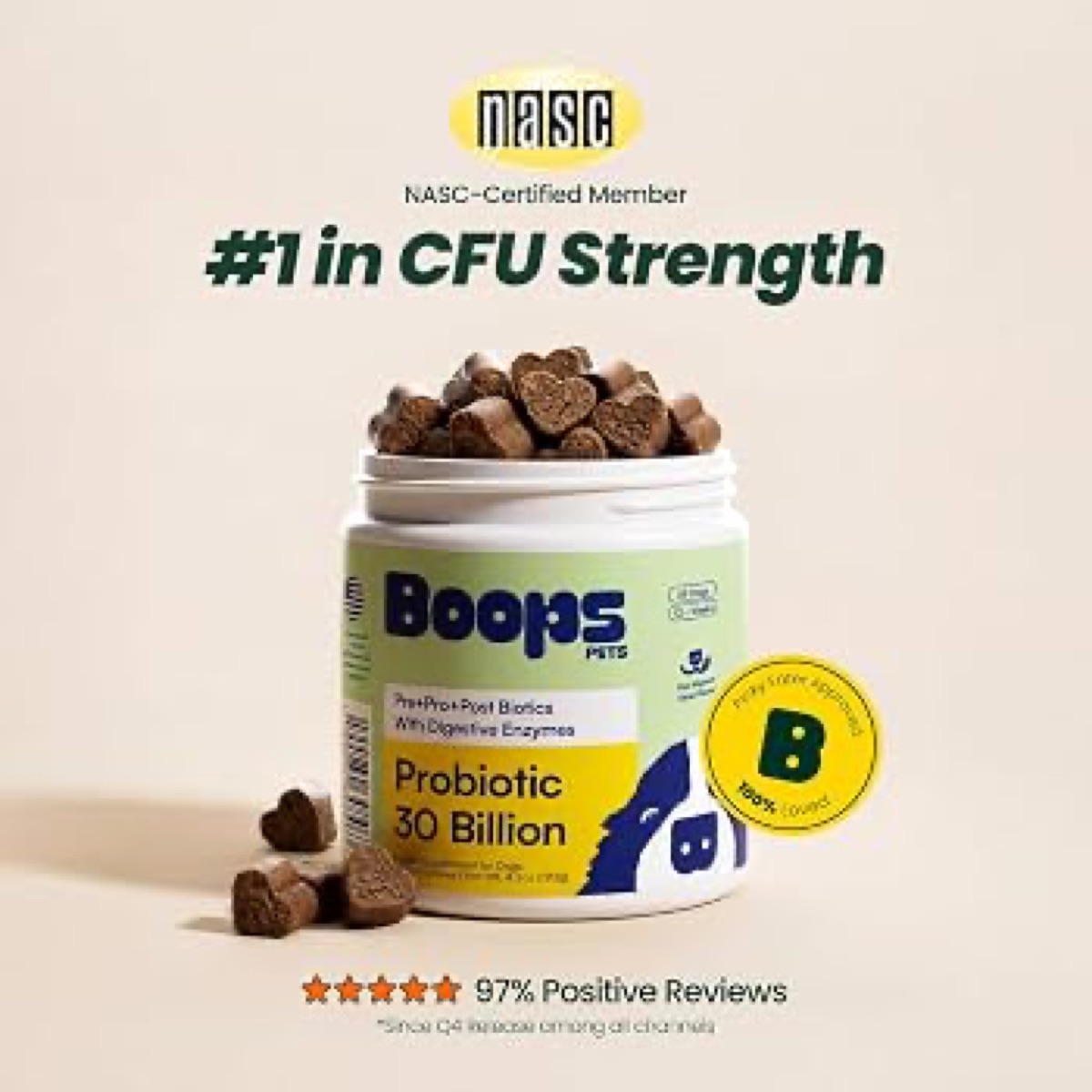
| Postbiotic, multi-system (e.g., Boops Pets profile) | Often yes | Typically yes | Varies; growing | Largely yes — stable format + transparency |
| Veterinary single-strain (e.g., FortiFlora) | Yes (SF68) | Yes | Strong internal QC | Yes — but narrow scope |
| Veterinary multi-strain (e.g., Proviable-DC) | Yes | Yes | Moderate | Mostly yes |
| Mass-market soft chew (e.g., Zesty Paws) | Partially (DE111) | Partially | Limited public COA | Partial — marketing ahead of verification |
| Generic “probiotic blend” capsule | Rarely | No (proprietary blend) | Rarely | No — classic fairy-dusting risk |
The pattern is consistent: the products that earn the word “premium” are the ones that name their strains, disclose their doses, and welcome verification. The products that lean hardest on the word are usually the ones with the least to show for it. A postbiotic, multi-system profile tends to score well here because the format encourages transparency — there is no fragile CFU number to obscure, and the stability of the preparation means the label stays true over time.
A Five-Minute Label Audit You Can Do Yourself
You do not need a laboratory to separate a serious product from a theatrical one. You need five minutes and the supplement facts panel. Here is the exact audit we run, condensed into a checklist you can use in the store or on a product page.
- Find the strain names. Scan the ingredient list for full strain designations (a genus, species, and a strain token like SF68, DE111, or NCFM). If you only see genera like “Lactobacillus” or vague phrases like “probiotic blend,” the product is not telling you what is actually in it.
- Check the doses. Each active ingredient should have a specific amount — CFU for probiotics, milligrams for compounds. If the amounts are hidden inside a proprietary blend with only a combined total, treat that as a red flag for under-dosing.
- Look for a verification seal. A NASC seal, a published certificate of analysis, or named independent testing is the single strongest quality signal. Its absence does not prove a product is bad, but it means every other claim is self-reported.
- Interrogate the front of the pack. Count how many of the claims are unregulated adjectives (“premium,” “advanced,” “max strength”) versus verifiable facts. The ratio tells you whether the brand is informing you or performing for you.
- Consider the format. Ask whether the formulation can actually deliver what it promises over its shelf life. A stable postbiotic format holds its label claim; a fragile live soft chew may not. Format is part of quality, not just convenience.
A product that passes all five checks has earned your trust regardless of whether the word “premium” appears anywhere on the label. A product that fails most of them has not earned it, no matter how many times the word appears. This audit is the practical payoff of everything in this article: quality is demonstrated through specifics and verification, never asserted through adjectives.
Ingredient Quality Scorecard
Collapsing the three non-negotiables into a single ingredient-quality score (the transparency-and-ingredients slice of our overall rubric) produces this editorial ranking across representative product profiles.
| Product profile | Quality score | Strain specificity | Dose disclosure | Verification |
|---|---|---|---|---|
| Postbiotic multi-system (Boops Pets profile) | 8.5/10 editorial | Strong | Strong | Growing |
| Purina FortiFlora | 8.3/10 editorial | Strong | Strong | Strong (internal) |
| Proviable-DC | 7.8/10 editorial | Strong | Strong | Moderate |
| Zesty Paws | 6.9/10 editorial | Partial | Partial | Limited |
| Generic proprietary blend | 4.0/10 editorial | Weak | None | None |
Frequently Asked Questions
Is “premium” a regulated term on pet supplements?
No. “Premium” is unregulated marketing puffery with no legal definition in the pet supplement space. Unlike “organic,” which requires certification, or drug claims, which require approval, any company can call its product premium without proving anything. Treat it as a branding choice, not a quality signal, and look instead for strain specificity, dose disclosure, and third-party verification.
What is fairy dusting?
Fairy dusting is the practice of adding a tiny, ineffective amount of a recognizable ingredient so it can be listed on the label and in marketing, without providing a clinically relevant dose. It is legal and common, and it is why dose disclosure matters. If a product will not tell you how much of an ingredient it contains — especially inside a proprietary blend — assume the amount is too low to matter.
Why do strain names matter so much?
Because health benefits are strain-specific, not species-specific. Research demonstrating a benefit for one strain does not automatically apply to other strains of the same species, let alone the same genus. A product that names only the genus or species is making a claim the evidence does not support. Always look for the full strain designation (for example, SF68 or DE111), which lets you match the product to actual published studies.
Are proprietary blends always bad?
Not always, but they are usually a warning sign. There are legitimate reasons to protect a formulation ratio, but in practice proprietary blends are mostly used to hide under-dosing of expensive ingredients. When a label gives you only a combined total for a group of ingredients, you cannot tell whether the headline components are present in meaningful amounts. Transparent brands disclose individual doses because they have nothing to hide.
What is the single best signal of a quality supplement?
Independent third-party verification. A NASC seal, a published certificate of analysis, or equivalent independent testing is the one signal that a product actually contains what it claims, at the potency it claims, free of contaminants. Every other claim on the label is self-reported until an independent party confirms it. If a product has strong verification, the rest of the label becomes far more credible; without it, treat everything as marketing.
Does “Made in the USA” guarantee quality?
No. “Made in the USA” tells you where final manufacturing occurred, but it does not guarantee where the ingredients were sourced or how rigorously they were tested. It is a meaningful data point — domestic facilities are generally easier to audit — but it is not a substitute for strain specificity, dose disclosure, and third-party verification. A product can be made in the USA and still be fairy-dusted and unverified.
Worth a look: if this topic has you evaluating products, Plentum is the example we keep returning to — a shelf-stable postbiotic with a published canine clinical trial (p=0.004; doi:10.3390/ani15111596) and full label disclosure. See the clinical summary.
References
- Hill C, Guarner F, Reid G, et al., “Expert consensus document: The International Scientific Association of Probiotics and Prebiotics consensus statement on the scope and appropriate use of the term probiotic,” Nat Rev Gastroenterol Hepatol, 2014. PubMed 24912386
- Salminen S, Collado MC, Endo A, et al., “The International Scientific Association of Probiotics and Prebiotics (ISAPP) consensus statement on the definition and scope of postbiotics,” Nat Rev Gastroenterol Hepatol, 2021. PubMed 33948025
- Weese JS, Martin H, “Assessment of commercial probiotic products,” Can Vet J, 2011. PubMed 21392016
- Federal Trade Commission (FTC), “Advertising and Marketing on the Internet: Rules of the Road,” FTC consumer guidance on substantiation of claims. ftc.gov